
How Small Boats Became the Primary Channel Crossing Route
For decades, the English Channel was seen as a natural moat—a formidable 21-mile stretch of treacherous water, heavy commercial shipping lanes, and unpredictable tides that deterred irregular sea crossings.
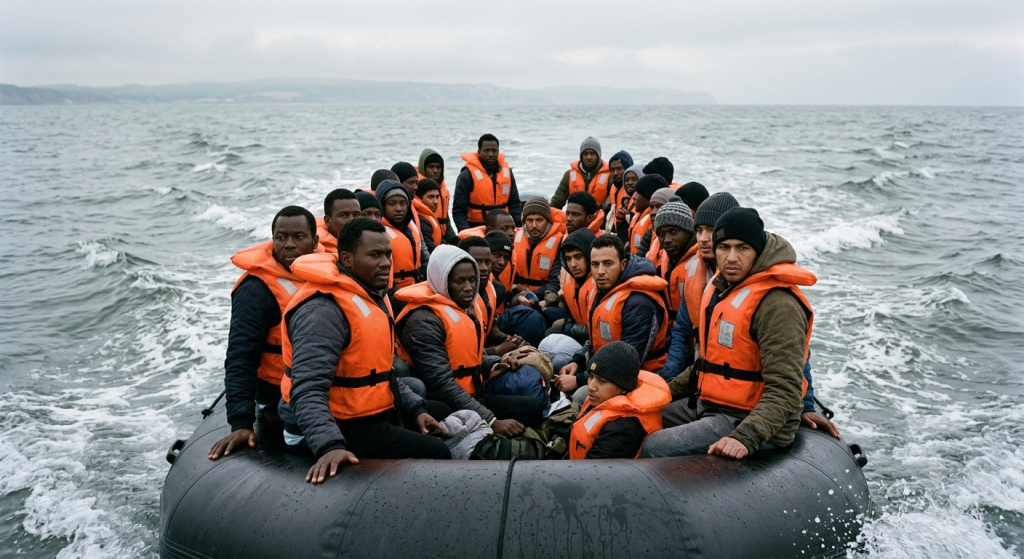
However, the reality along the UK’s southern coast has fundamentally changed. Small, inflatable boats carrying asylum seekers and migrants from northern France have evolved from an obscure anomaly into one of the central political, human, and legal debates in modern British history.
The Pre-2018 Era: Stowing Away on Land
Before late 2018, small boat crossings were exceptionally rare. Historically, individuals seeking unauthorised entry into the UK from northern France relied primarily on land transport.
Throughout the late 1990s and 2000s—symbolised by informal migrant encampments like the Sangatte centre and later the “Calais Jungle”—the dominant methods were hiding in the back of heavy goods vehicles (HGVs), stowing away inside freight trucks, or boarding ferries and trains travelling through the Channel Tunnel.
As UK and French authorities poured hundreds of millions of pounds into physical security—installing high-definition thermal cameras, heartbeat detectors, and miles of razor-wire fencing around Calais and Dunkirk ports—land routes became increasingly difficult to breach. Organised criminal smuggling networks adapted, turning their focus away from the ports and toward the unguarded coastlines.
2018–2019: The Turning Point
Small boat arrivals first began registering as a distinct, organised trend in late 2018.
Wikipedia
- 31 January 2018: The Home Office recorded its first small group arrival of the modern era when seven people landed in a single dinghy.
Wikipedia
- Christmas 2018: A sharp spike in arrivals led the UK Home Secretary to formally declare a “major incident”. By the end of 2018, just under 300 people had successfully crossed.
Wikipedia
- 2019: The number jumped to nearly 1,900. Human traffickers transitioned from small rigid-hulled inflatable boats (RIBs) to commercial-grade inflatable dinghies designed to squeeze in dozens of passengers.
Wikipedia
2020–2022: Exponential Growth & Peak
The COVID-19 pandemic accelerated the shift to the sea. Global travel disruptions and reduced cross-Channel commercial lorry traffic effectively sealed off land-based stowaway routes, leaving small boats as the primary option for migrants.
UK Parliament
- 2020: Over 8,400 people arrived via small craft.
- 2021: Crossings quadrupled to more than 28,500.
Wikipedia
- 2022 (The Peak): A record 45,755 people made the perilous crossing, with single-day arrivals exceeding 1,200 people during calm weather windows in August.
Wikipedia
The Numbers at a Glance
Since the government began official tracking in 2018, over 200,000 people have crossed the Channel in small boats.
Migration Watch UK
| Year | Small Boat Arrivals | Year-over-Year Shift | Context |
| 2018 | 299 | — | Emergence of organised boat routes |
| 2019 | 1,843 | +516% | Smuggling networks expand |
| 2020 | 8,462 | +359% | Pandemic closes land/ferry routes |
| 2021 | 28,526 | +237% | Larger, overloaded craft deployed |
| 2022 | 45,755 | +60% | All-time annual peak recorded |
| 2023 | 29,437 | -35% | Poor weather & temporary deterrence |
| 2024 | 36,816 | +25% | Resurgence in summer months |
| 2025 | 41,472 | +12.6% | Second highest annual total |
Why the Route Persists
The continuation of small boat crossings over the last decade stems from several interconnected factors:
- Changing Demographics and Protection Claims: Home Office data show that around 90–95% of small-boat arrivals claim asylum upon arrival. A significant majority hail from conflict zones or repressive regimes, including Afghanistan, Iran, Syria, Eritrea, and Iraq.
- Lack of Legal Sea Routes: Because UK law generally requires an individual to physically set foot on British soil to lodge an asylum claim, individuals without visa pathways often view irregular crossings as their only viable option.
- Industrialised Smuggling Operations: People-smuggling networks operating out of northern France have turned Channel crossings into a multi-million-pound business model, purchasing cheap, low-quality inflatables in bulk across Europe and packing double the safe capacity onto each vessel.
Looking Ahead
What began as a sporadic emergency in 2018 has matured into an entrenched operational challenge spanning nearly a decade. Despite shifting policy approaches, bilateral accords between London and Paris, and increased enforcement along French beaches, the fundamental drivers behind the crossings—global displacement, hardened land borders, and lucrative smuggling logistics—ensure the Channel route remains heavily travelled whenever sea conditions permit.
Reform UK have said that if they get into power, they will sort out the boats in two weeks. They will push the boats back to France using the navy. I’m sure the French will have something to say about that.