
The History of Maserati: From Racing Pioneer to Modern Luxury Icon
Few names in the automotive world evoke as much passion, heritage, and pure Italian elegance as Maserati. Instantly recognisable by its iconic Trident emblem, the Modena-based marque has spent over a century balancing high-performance motorsport engineering with handcrafted luxury GT touring.
From its humble beginnings in a small Bologna workshop to dominating World Championship Formula 1 tracks and transitioning into the modern era of electrification, here is the complete story of Maserati’s evolution.
1. The Founding Brothers and the Birth of the Trident (1914–1930s)
Maserati was officially founded in Bologna, Italy, on December 1, 1914, by brothers Alfieri, Ettore, and Ernesto Maserati. Raised with a deep fascination for mechanics and high-speed engines, the brothers initially operated as a specialised garage building race cars for Diatto.
When Diatto suspended its motorsport program in 1926, the Maserati brothers built their very first original race car: the Tipo 26. Driven by Alfieri Maserati himself, the Tipo 26 won its class at the gruelling Targa Florio in 1926, establishing the brand’s reputation overnight.
1914: Workshop Founded ➔ 1926: First Car (Tipo 26) ➔ Trident Logo Designed by Mario Maserati
The Origin of the Trident Logo
Unlike his mechanically minded brothers, Mario Maserati was an artist. He designed the brand’s legendary logo based on the Fountain of Neptune located in Bologna’s Piazza Maggiore. The Trident symbolised strength, vigour, and Neptune’s control over the sea, rendered in Bologna’s traditional red and blue colours.
2. The Golden Era of Grand Prix & Le Mans (1930s–1950s)
Tragedy struck in 1932 when visionary founder Alfieri Maserati passed away following complications from a racing crash. In 1937, the surviving brothers sold their shares to industrialist Adolfo Orsi, who relocated the company headquarters to Modena, Italy—where Maserati remains based to this day.
Historic Racing Achievements
- Indy 500 Dominance (1939 & 1940): Maserati became the first and only Italian manufacturer to win the Indianapolis 500 back-to-back with the supercharged Maserati 8CTF (nicknamed the “Boyle Special”).
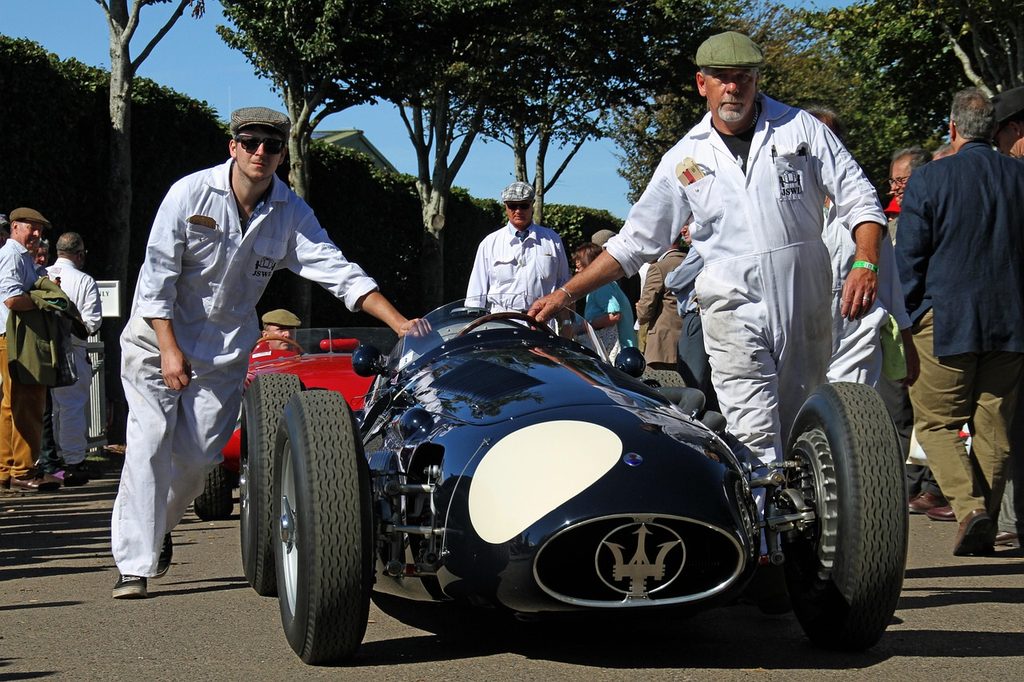
- Formula 1 World Championship (1957): The breathtaking Maserati 250F is widely regarded as one of the greatest Grand Prix cars ever built. Argentine racing legend Juan Manuel Fangio drove the 250F to a legendary victory at the 1957 German Grand Prix at Nürburgring, capturing his fifth F1 World Championship title.

3. Shifting to Road Cars: The Birth of the Grand Tourer (1947–1970s)
Following its success on the track, Maserati pioneered the concept of the high-performance Grand Tourer (GT)—a car capable of combining race-bred engines with long-distance luxury.
Iconic Road Models
- Maserati A6GCS & 3500 GT (1957): The 3500 GT was Maserati’s first mass-produced road car. Featuring aluminium bodywork by Touring Superleggera and a 3.5-litre inline-6 engine derived from racing, it proved to be a massive commercial success.
- Maserati Sebring & Mistral (1960s): Continued the brand’s tradition of naming road cars after famous winds (a tradition that later inspired the Ghibli, Bora, Khamsin, and Levant).
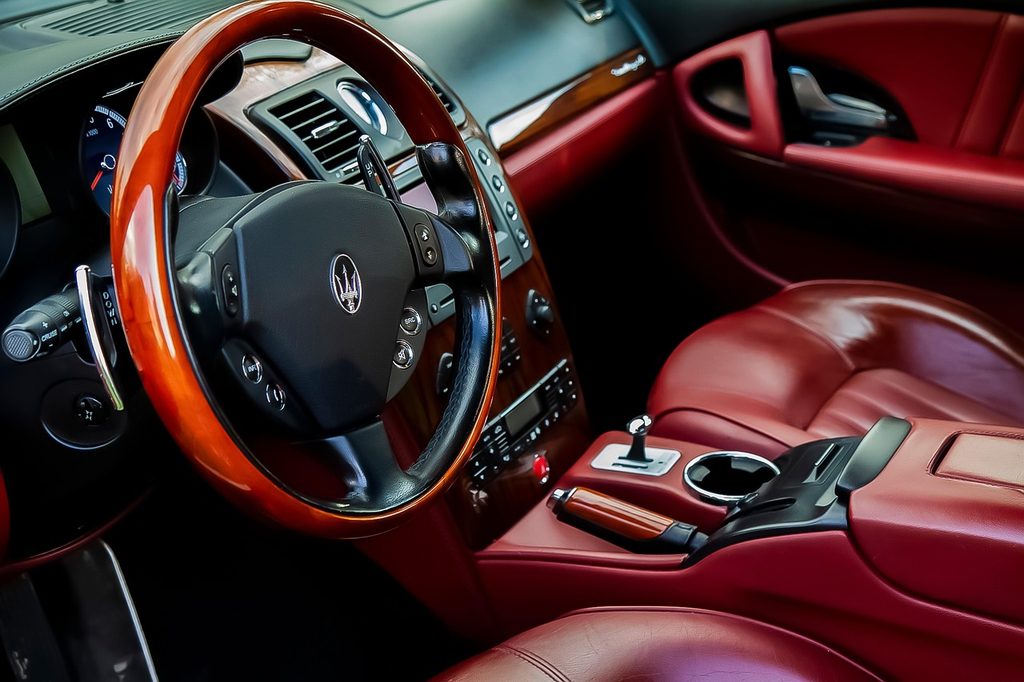
- Maserati Quattroporte (1963): Pioneered an entirely new vehicle segment: the world’s fastest four-door luxury sedan. Fitting a race-derived V8 engine inside a stylish sedan body created an instant flagship.
- Maserati Ghibli (1967): Styled by Giorgetto Giugiaro, the original Ghibli coupe stood out with its long bonnet, pop-up headlights, and 174 mph top speed, rivalling the Ferrari Daytona and Lamborghini Miura.
4. Ownership Changes: Citroën, De Tomaso, and Ferrari
The 1970s brought economic instability, oil crises, and changing automotive ownership:
| Era | Owner / Corporate Structure | Major Milestones & Models |
| 1968–1975 | Citroën Era | Introduced mid-engine supercars like the Bora and Merak, incorporating Citroën’s hydraulic brake and suspension systems. |
| 1975–1993 | De Tomaso Era | Managed by Alejandro de Tomaso. Shifted toward twin-turbocharged, smaller engines with the Biturbo line, boosting sales volume but struggling with reliability perception. |
| 1993–2004 | Fiat & Ferrari Integration | Fiat purchased Maserati in 1993 and later transferred 50% ownership to arch-rival Ferrari in 1997. Ferrari overhauled production quality, leading to the acclaimed 3200 GT and Coupe/Cambiocorsa. |
Citroën Era (1968) ➔ De Tomaso (1975) ➔ Fiat & Ferrari Era (1990s) ➔ Stellantis Group
5. Modern Resurgence: The MC12 and Global Expansion
Under Ferrari management and subsequent integration into Fiat Chrysler Automobiles (FCA), Maserati entered a major rebirth.
The MC12 Hypercar (2004)
To mark its return to GT racing after a 37-year absence, Maserati created the hypercar MC12. Based on the Ferrari Enzo chassis but featuring a distinct aerodynamic body, only 50 road-going units were produced. The MC12 dominated the FIA GT Championship, winning multiple titles.
Expanding the Modern Lineup
Throughout the 2010s, Maserati scaled up global production by expanding its portfolio:
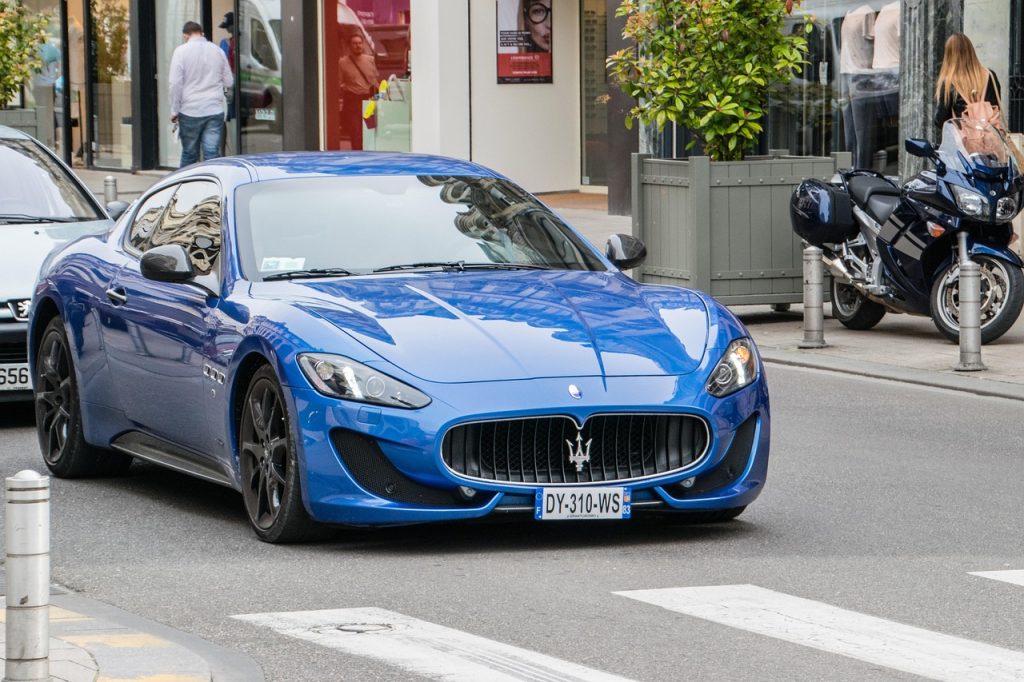
- GranTurismo & GranCabrio (2007–2019): Designed by Pininfarina, featuring naturally aspirated Ferrari-built V8 engines with an unforgettable exhaust note.
- Ghibli (Executive Sport Sedan): Reintroduced in 2013 to compete against mid-size European luxury sedans.
- Levante (2016): Maserati’s first-ever production SUV, bringing Italian styling and active air suspension to the luxury SUV market.
6. Maserati Today: The Nettuno Engine and Folgore Electrification
Now operating under the Stellantis group, Maserati has launched an ambitious new era focused on bespoke supercar engineering and full electrification.
The MC20 Supercar & Nettuno Engine
In 2020, Maserati unveiled the MC20 (Maserati Corse 2020), marking a return to 100% in-house engineering at Modena. At its heart sits the groundbreaking Nettuno engine—a 3.0-litre twin-turbo V6 utilising Formula 1-derived pre-chamber combustion technology to produce over 620 horsepower.
The Folgore Era (Full Electrification)
Maserati is leading the Italian luxury market into electric mobility under its Folgore (Italian for “Lightning”) badge:
- GranTurismo Folgore: A tri-motor, 800-volt electric GT delivering over 750 horsepower and 0–60 mph acceleration in roughly 2.7 seconds.
- Grecale Folgore: A fully electric compact luxury SUV.
- GranCabrio Folgore: The luxury sector’s first all-electric convertible.
Summary Timeline
1914 ── Maserati founded in Bologna by the Maserati brothers.
1926 ── First official car, the Tipo 26, wins its class at Targa Florio.
1939 ── Wins the Indianapolis 500 (repeated in 1940).
1957 ── Fangio wins F1 Championship in 250F; 3500 GT launches luxury GT era.
1963 ── First-generation Quattroporte revolutionizes sports sedans.
2004 ── MC12 supercar claims FIA GT Championship dominance.
2020 ── MC20 supercar debuts featuring the in-house Nettuno V6 engine.
2024+─ Full transition toward Folgore electric powertrains across the entire lineup.
From its roots on 1920s dirt ovals to modern electric grand tourers, Maserati remains defined by its core philosophy: “Exceptional Everyday”—delivering race-bred performance wrapped in unmistakable Italian style.