
Motorsport
WRC calender 2026


The 2026 Rally World Championship
| Round | Rally Dates | Rally Date | Surface |
1  | 22 – 25th January | Monte Carlo Rally | Mixed |
2  | 12 – 15th February | Rally Sweden | Snow |
3  | 12 – 15th March | Safari Rally Kenya | Gravel |
4  | 9 – 12th April | Croatia Rally | Tarmac |
5  | 23 – 26th April | Rally Islas Canarias | Tarmac |
6  | 7 – 10th May | Portugal Rally | Gravel |
7  | 28 – 31st May | Rally Japan | Tarmac |
8  | 25 – 28th June | Rally Greece | Gravel |
9  | 16 – 19th July | Estonia Rally | Gravel |
10  | 30th July – 2nd Aug | Rally Finland | Gravel |
11  | 27 – 30th August | Paraguay Rally | Gravel |
12  | 10 – 13th September | Rally Chile | Gravel |
13  | 1 – 4th October | Italian Rally | Gravel |
14  | 11 – 14th November | Saudi Arabia Rally | Gravel |


The Group B Era: A Symphony of Speed and Reckoning
The Group B era of rallying stands as a defining chapter in motorsport history, celebrated for its astonishing pace, radical design, and the electric tension it created among fans, teams, and governing bodies. It emerged from a desire to push performance to the outer limits, while simultaneously exposing the sport to profound risks that would ultimately shape its fate.


Speed and Rule Philosophy
Group B cars were built to deliver unparalleled acceleration, top-end speed, and dynamic handling. Light-weight chassis, turbocharged engines, advanced four-wheel-drive systems, and sophisticated aerodynamics combined to create machines capable of propelling down gravel stages with breath-stealing velocity. The regulatory framework favoured minimal weight, maximum power, and reduced homologation constraints, encouraging bold engineering solutions and rapid development. The result was a generation of cars that could surge from standstill to astonishing speeds in a matter of seconds, while negotiating tight, winding courses at a pace that astonished spectators and challenged drivers alike.

Public Adrenaline and Spectator Experience
Rally events of this era cultivated a visceral atmosphere that transcended typical motorsport spectacles. The roar of turbocharged engines, the plume of dust and gravel, and the rapid-fire succession of stage starts and finishes created an electric cadence that drew massive crowds. Spectators lined the routes, often closer to the edge of danger than modern safety protocols would permit, savouring the drama of high-stakes performance in real-time. The immediacy of on-stage battles—an essential feature of Group B—translated into enduring memories, heated debates, and an enduring sense that anything could happen on any given rally day.
The Drivers: Courage, Skill, and Precision
The era attracted a cadre of fearless, exceptionally skilled drivers who balanced technical mastery with nerve-steely composure. These competitors faced unpredictable surface conditions, demanding layouts, and the constant pressure of competing against some of the most powerful machines ever built for the sport. The drivers’ talents ranged from flawless car control on loose surfaces to strategic pit-to-pit decisions under race conditions that could pivot at a moment’s notice. Their reputations were forged in the crucible of high-speed contested stages, where precision, instinct, and audacity were equally vital.
The Cars: Pioneering Technology and Bold Design
Radical engineering choices hallmarked group B cars. Lightweight structures, high-output turbocharged engines, and all-wheel drive enabled exceptional traction and acceleration. Ingenious suspension setups, wide fenders, and aggressive aerodynamics contributed to stability at extraordinary speeds, while compact dimensions facilitated agility through tight bends. Iconic models from the era—ranging from compact hatchbacks to purpose-built podium contenders—pushed the boundaries of what was technically feasible, driving a wave of innovation that influenced rally design for years to come.

Impact on the Sport
The Group B movement left an indelible imprint on rallying. It elevated the sport’s spectacle, drawing larger audiences and expanding global media coverage. The emphasis on performance spurred rapid technological progress, prompting manufacturers to invest heavily in research and development. Yet the period also exposed safety vulnerabilities, as the sheer power of the vehicles, combined with high-speed stage conditions, led to serious incidents. The lessons learned—especially regarding driver protection, crowd management, and event governance—prompted reforms that reshaped regulations and safety practices in the subsequent era.
Legacy and Reflections
Today, Group B is remembered for its audacious spirit and its paradox: a triumph of engineering brilliance and a sobering reminder of the costs of pushing limits too far. Its legacy endures in the emphasis on safety, the appreciation for technical innovation, and the enduring fascination with machines that could conquer extreme terrains at extraordinary speeds. For engineers, drivers, and fans alike, the era remains a benchmark of bold ambition tempered by the responsibilities that accompany exceptional capability.
The Cars
Era early Group B (1982–1984)
- Audi Quattro (Ur-Quattro)
- Renault 5 Turbo
- Citroën BX 4TC
- Lancia 037
Era mid Group B development (1985–1986)
- Lancia Delta S4
- Peugeot 205 T16
- MG Metro 6R4
- Ford RS200
Era peak and evolution (1986–1987)
- Peugeot 205 T16 Evo 2
- Lancia Delta S4 Evo
- Ford RS200 Evolution
- Audi S1 (Sport quattro S1 variants)


| Race | Country | GP | Race Day |
| 1 |  | Australian GP | 08 March |
| 2 |  | Chinese GP | 15 March |
| 3 | | Japanese GP | 29 March |
| 4 |  | Bahrain GP | 12 April |
| 5 | | Saudi Arabian GP | 19 April |
| 6 |  | Miami GP | 03 May |
| 7 |  | Canadian GP | 24 May |
| 8 | | Monaco GP | 07 June |
| 9 |  | Barc-Catalunya GP | 14 June |
| 10 |  | Austrian GP | 28 June |
| 11 |  | British GP | 05 July |
| 12 |  | Belgian GP | 19 July |
| 13 |  | Hungarian GP | 26 July |
| 14 |  | Dutch GP | 23 August |
| 15 | | Italian GP | 06 September |
| 16 | | Spanish GP | 13 September |
| 17 |  | Azerbaijan GP | 26 September |
| 18 |  | Singapore GP | 11 October |
| 19 | | United States GP | 25 October |
| 20 |  | Mexico City GP | 01 November |
| 21 |  | São Paulo GP | 08 November |
| 22 | | Las Vegas GP | 21 November |
| 23 |  | Qatar GP | 29 November |
| 24 |  | Abu Dhabi GP | 06 December |

Motorscycles
Wear the Perfect-fit Motorcycle Helmet
Motorcycle accessories like a helmet are a matter of personal choice.

Motorcycle accessories like a helmet are a matter of personal choice. In that case, the aesthetic side often succeeds over anything else. At any rate, this has contributed to why safety is overlooked.
To shun misconceptions in choosing motorcycle helmets, here are some of the factors that you have to consider:
Shape
This is the most important factor that you have to understand before purchasing a helmet. Riders come in varying head shapes. These shapes include round, oval, egg, reverse egg and earth. Helmets are also particularly made to cater to these varying head shapes. Thus, the choice is given to the purchasers. They must select the most appropriate helmet shape that will greatly support their head.
Visibility
Be sure that your helmet gives you appropriate peripheral vision. This is simply to avoid accidents and other untoward incidents.
Liners
Liners vary depending on the design, material and shape of the helmet. Liners must give comfort and protection to the rider. Thus, it must be compatible with the rider’s needs.
Liners that give pressure points must be avoided. Pressure points are usually located against the temples, forehead and cheeks. A helmet liner skull cap is preferable. Moreover, it is better if you personally try the helmet before purchasing it. This is to ensure that it will not be burdensome in the future.
Color
Colour is important in the sense that it affects conspicuity. Bright colours are preferable over solid and dull ones. The purpose is to make the rider visible even during nighttime. This is to avoid collisions and the like.
Before you purchase a helmet, make sure that you are knowledgeable of all the factors involved. You do not purchase simply because it is hot or at the moment hype.
Also, before purchasing, wear it first for an extended period to be sure of the fit and feel. Wear earplugs to be acquainted with the surrounding sounds.
Some of the leading motorcycle helmet manufacturers are Arai, Bell, Icon, AGV, Nolan, Thor, and Erex. The helmets they are releasing are mostly tested and approved by the DOT. Choosing is using your mind and your senses.

So What’s The ECHR All About?

Has Sony Shot Themselves In The Foot

Backlash as Sony and its staff take abuse.


-

 Info1 week ago
What is El Niño, and how does it affect us
-

 Entertainment2 weeks ago
What’s on Netflix this September 26
-

 Football2 weeks ago
UK Sport News 2026: Football, Rugby, Cricket and Live Scores
-

 Environment1 week ago
Understanding Global Environmental Shift
-
 Home2 weeks ago
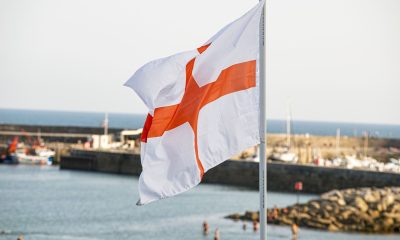
England has a flag and is proud of it.
-

 Weather1 week ago
UK Weekend Weather For The UK
-

 Europe7 days ago
Mastering Budget Travel in Switzerland
-
 Consoles5 days ago
Backlash as Sony and its staff take abuse.
-
 Consoles3 days ago
Has Sony Shot Themselves In The Foot
-
 Government2 days ago
So What’s The ECHR All About?