
Motoring
Potholes, the nightmare of the roads and highways that are dangerous
Potholes, the nightmare of the roads and highways that are dangerous


Driving these days is hard enough without any extra distractions. With so many cars on the roads and gridlock when people drive to work, keeping your concentration is important. But drive on the UK roads, and you will see and feel potholes.
So, what’s a pothole? It is a hole in the tarmac or road that you can drive into or through. Some potholes can be as deep as 6 inches and 2 feet wide, but a lot are just holes. Nowhere is safe from them if you have a road, it can get potholes.
Potholes develop when water seeps into tiny cracks in the road surface, usually caused by traffic over a period. When this water freezes, it expands and then, when it thaws, it gets smaller. This starts to make the cracks bigger, further weakening the road and increasing the amount of water that can get under the surface. As the road surface weakens, traffic breaks it up to create a small hole, which expands as more traffic passes over.
There are many dangers with potholes in the road. You can get vehicle damage. Potholes can cause serious damage to vehicles like punchers, as well as suspension and wheel alignment problems. Repairs can be costly, and vehicle safety can be compromised. It’s not just motorists that suffer, it’s the motorcyclists, bicycle riders and pedestrians.
Decreased visibility can contribute to accidents, particularly on high-speed roads or motorways. Exposure to potholes can induce stress, anxiety, and driver fatigue, affecting motorists’ mental well-being and overall road safety. The fear of potholes may deter individuals from using certain routes or travelling altogether.
With road tax increasing yearly, where are our taxes going? Our roads in areas are unfit for purpose. They are dangerous and damaging and need to be addressed quickly. But what happens if you damage your car? Can you do anything about it?
“If your car is damaged by a pothole, you may be able to claim compensation from your car insurance provider. However, the success of your claim will depend on whether the pothole has already been reported to the appropriate authority. If it has not, you may not be able to claim compensation. To make a claim, you will need to provide evidence of the damage, such as photos and repair invoices, and contact your insurance provider to discuss the claim” (moneysavingexpert.com)
Either way, we are the losers. We can pay our road tax and get second-rate roads to drive on. As the roads get busier, we need to keep safe and watch the road. Until the government start listening to its constituents, we will get nowhere. Temporary repairs are useless, and sometimes they last days, not months.
Keep motoring and be vigilant.









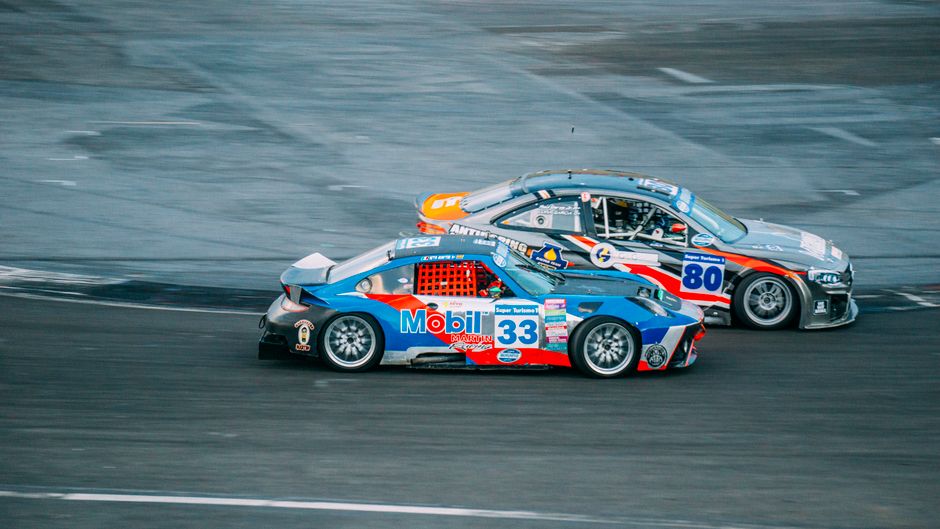
The 24 Hours of Le Mans is an endurance sports car race held annually near the city of Le Mans in France. The first running took place in 1923, which makes it the oldest active endurance sports car race in the world. That single fact explains a great deal about its standing. Championships have been renamed and regulations rewritten many times since, yet the Le Mans 24 Hours has held its position at the top of endurance motorsport.
The organisers describe the race as a technological challenge and an immeasurable human adventure, and that mixture is what separates it from a straightforward sprint event. Manufacturers use it to test ideas under conditions no laboratory can copy, while spectators get a full day and night of racing in one sitting. It is one of the biggest sporting events in the world, and the story of how it got there runs through a French motoring club, a river city and a century of mechanical change.
1923 and the Club That Made the Race Happen
Behind the event sits the Automobile Club de l’Ouest, usually shortened to the ACO. The club was founded in 1906 and designs and organises world-leading car races, with the 24 Hours of Le Mans as its best-known creation. The ACO presents itself as the creator and organiser of the race, a role it has held since the earliest days of the event.
The ACO is not only a race promoter. It is a club with more than 40,000 car and motorbike enthusiast members, and part of its stated purpose is protecting road users on a daily basis. Members receive preferential conditions at races run on the Le Mans circuit, and the club also organises events across western France, the region it refers to as le Grand Ouest.
That structure helps explain the race’s continuity. A members’ club with a long institutional memory has been able to carry the event through the different eras of motorsport, adapting the rulebook while keeping the central idea intact. The format is stated in the name itself: a race that runs for 24 hours, held annually, on a circuit near the city.
The City Behind the Name
Le Mans is a city in northwestern France, sitting on the Sarthe River where it meets the Huisne. Traditionally the capital of the province of Maine, it is now a prefecture and commune in the Pays de la Loire region. The city is known as the City of Art and History, and its most famous export is the endurance race that carries its name, with thousands of spectators attending every year.
Anyone who has only seen the event on television tends to underestimate the city’s part in it. The circuit sits close to Le Mans itself, and race week reshapes the surrounding area for its duration. For a first visit, check the official circuit and ticketing pages rather than relying on older write-ups, because the programme, entry list and access arrangements are all published there and can change from year to year.
How the Le Mans Name Grew Beyond One Weekend
The 24 Hours is the centrepiece, but the Le Mans name now covers a family of championships, support series and even a video game. The official site links out across the main competition and its associated series, which gives a clear picture of how far the brand reaches.
| Series or product | What it is |
|---|---|
| 24 Hours of Le Mans | The flagship endurance race, held annually near the city of Le Mans and a round of the FIA World Endurance Championship |
| FIA World Endurance Championship | The world championship of which the Le Mans 24 Hours forms a part |
| European Le Mans Series | A European endurance championship; its calendar has included a four-hour race at Portimao |
| Michelin Le Mans Cup | A support series carrying the Le Mans name, with its own news, results and live timing |
| Asian Le Mans Series | The Asian counterpart within the same racing family |
| Le Mans Ultimate | The official game of the event |
For British readers, the wider family can be a gentler introduction to the sport. The European series and the Michelin Le Mans Cup run shorter races, which makes them easier to follow in a single sitting, while the 24 Hours remains the long-form event that everything else builds towards.
Why Endurance Racing Looks So Different
A 24-hour race rewards different qualities from a short one. Surviving the distance matters as much as outright speed, and the ACO’s own description of the event leans on that idea of a technological challenge paired with a human adventure. The result is a form of motorsport where reliability, planning and patience carry real weight.
The calendar has changed shape since 1923 as well. What began as a single annual fixture now sits inside a world championship, with feeder series on other continents and a museum and track-day operation keeping the circuit in use through the rest of the year. That spread is one reason the Le Mans name survives in conversations far outside France.
Le Mans Now: The Modern Event
The 24 Hours of Le Mans is a round of the FIA World Endurance Championship, which places it inside a season-long title fight rather than leaving it as a standalone curiosity. The next edition listed by the organisers is the 95th running of the race, scheduled for 9 to 13 June 2027. Ticketing, the entry list, the full programme and a circuit map are all published on the official race site.
Dates, session times and entry details can change, so confirm them with the organisers before booking travel or accommodation. The official pages are also the place to look for hospitality options, which are typically handled separately from general admission.
The sport has moved online too. Le Mans Ultimate is listed as the official game of the event, and the organisers run a subscription-style service alongside their live coverage. For supporters who cannot travel to France, that is often the simplest way to follow practice, qualifying and the race itself.
The Museum, the Circuit and the Rest of the Year
At the gates of the legendary circuit, the Motor Sport Museum, known as M24, invites visitors to explore the world of motorsport, covering endurance racing and Formula 1 among other subjects. It is a sensible stop for anyone who wants context before or after race weekend, and it keeps the site active outside the main event.
The circuit also hosts track days, so the same tarmac used for the 24 Hours appears in traveller guides aimed at people who want to drive it themselves. Meanwhile the European and Asian series, the Michelin Le Mans Cup and the world championship all keep the Le Mans name in front of audiences across the year.
What Has Kept Le Mans Relevant for a Century
Three factors stand out. The first is age. A race first run in 1923 carries a weight of tradition that newer events cannot simply buy, and the oldest active endurance sports car race in the world has had more than a hundred years to build its reputation.
The second is the club behind it. The ACO’s membership of more than 40,000 enthusiasts, its work on road safety and its programme of events across western France give the race a support base that is not purely commercial.
The third is the technical dimension. Treating the race as a test bed as much as a competition has kept manufacturers interested across decades of change, from the early years through to the modern championship era. That is why the event is still spoken about as a challenge rather than just a fixture.

Planning a First Trip to Le Mans
- Check the official race site for confirmed dates, the entry list, the programme and a circuit map before booking anything.
- Buy tickets through the official ticketing pages linked from the organisers rather than unofficial resale sites.
- Allow time for the city as well as the circuit. Le Mans is a City of Art and History with a river running through it.
- If one weekend is not enough, look at the European and Asian series calendars or the Michelin Le Mans Cup.
- Expect crowds. Thousands of spectators attend every year, so plan travel and accommodation early.
Frequently Asked Questions
When was the first Le Mans race held?
The 24 Hours of Le Mans was first run in 1923, which makes it the oldest active endurance sports car race in the world. It has been held annually near the city of Le Mans in France ever since, and today it forms a round of the FIA World Endurance Championship.
Who organises the 24 Hours of Le Mans?
The Automobile Club de l’Ouest, commonly known as the ACO, is the creator and organiser of the race. The club was founded in 1906 and designs and organises world-leading car races. It also has more than 40,000 car and motorbike enthusiast members and runs events across western France.
Where exactly is the Le Mans circuit?
The race takes place near the city of Le Mans in northwestern France. The city itself sits on the Sarthe River where it meets the Huisne, and it is now a prefecture and commune in the Pays de la Loire region. The circuit lies close by, and the surrounding area fills with spectators every year.
When is the next Le Mans 24 Hours?
The next edition listed by the organisers is the 95th running of the race, scheduled for 9 to 13 June 2027. Ticketing, the entry list, the full programme and a circuit map are published on the official race site. Always confirm dates there before booking travel.
Is Le Mans part of a championship?
Yes. The 24 Hours of Le Mans is a round of the FIA World Endurance Championship, so it counts towards a season-long title as well as standing alone as an event. Related series include the European Le Mans Series, the Michelin Le Mans Cup and the Asian Le Mans Series.
From a single race first staged in 1923 to a global name attached to world championships, support series, a museum and an official video game, Le Mans has grown well beyond one weekend in northwestern France. The essentials have not moved: a 24-hour race, a circuit near the city, and a club that has organised it since the beginning. Anyone planning to attend should treat the official race site as the final word on dates, tickets and the programme.
Classic Cars
The Icon of an Era: History, Specifications, and Performance of the Jaguar E-Type
When the Jaguar E-Type (sold in North America as the XK-E) debuted at the Geneva Motor Show on March 15, 1961, it reshaped the automotive landscape overnight.
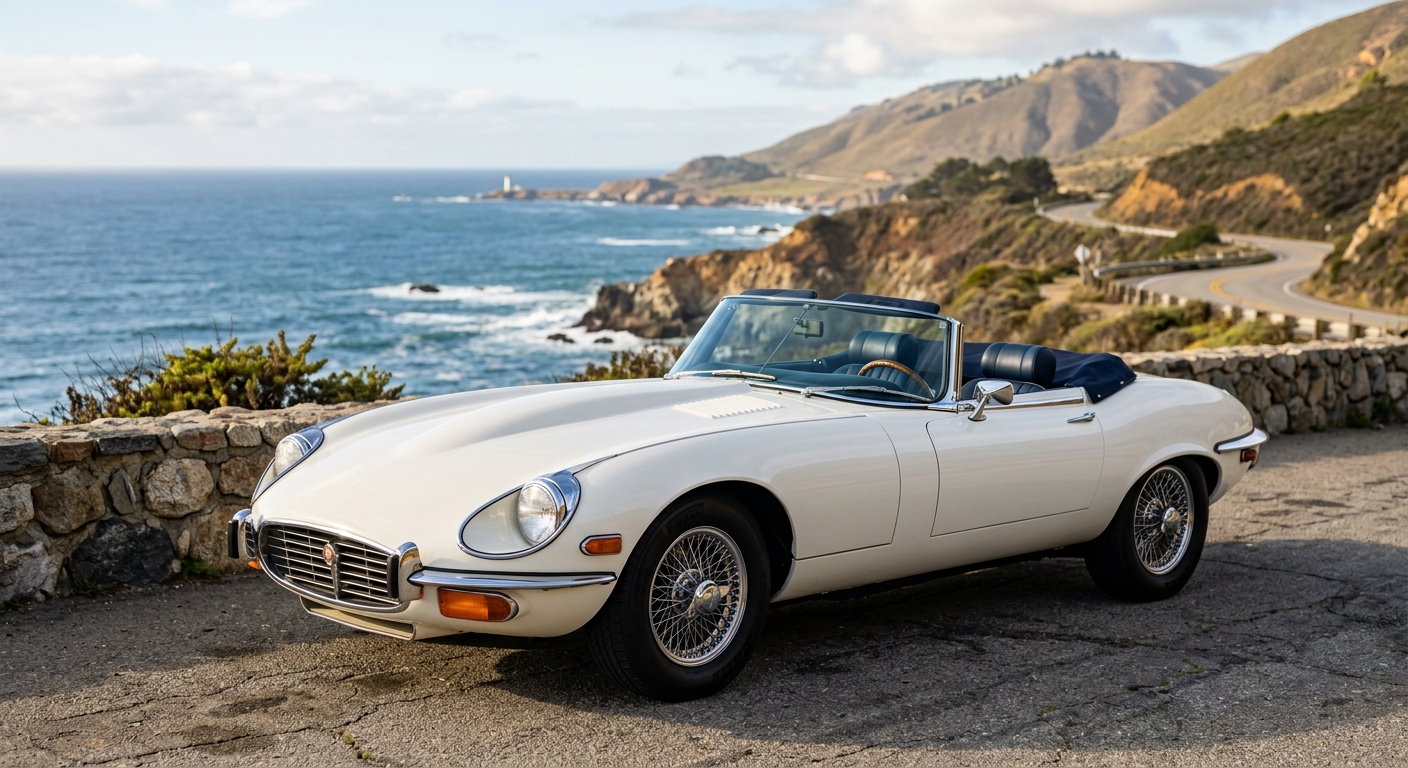
When the Jaguar E-Type (sold in North America as the XK-E) debuted at the Geneva Motor Show on March 15, 1961, it reshaped the automotive landscape overnight. Designed by aerodynamicist Malcolm Sayer using principles honed on Jaguar’s Le Mans-winning D-Type, its long bonnet, sweeping curves, and faired-in headlights famously prompted Enzo Ferrari to call it “the most beautiful car ever made.”
Beyond its striking looks, the E-Type offered supercar performance—a claimed 150 mph top speed—at a fraction of the price of contemporary Italian or British rivals.
Production Years and Generations
The E-Type was manufactured continuously from 1961 through 1974 across three distinct generations.
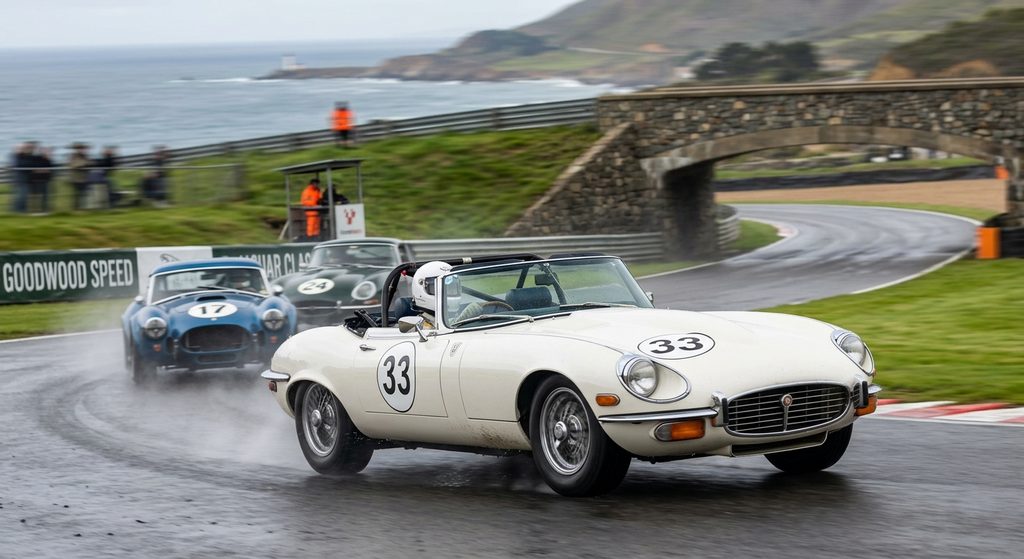
- Series 1 (1961–1968): The purest realisation of Sayer’s design, featuring glass-covered headlights, smooth body lines, and toggle switches inside. Early cars (1961–1964) utilised a 3.8-litre engine and a non-synchromesh first gear “Moss” transmission. In late 1964, Jaguar upgraded to a 4.2-litre engine and a fully synchromesh gearbox. A 2+2 coupe with an extended wheelbase arrived in 1966.
- Series 1.5 (1967–1968): A transitional, unofficial designation for cars modified to meet emerging US safety and emissions standards. Distinctive features included exposed headlights (no glass covers) and revised cabin switches.
- Series 2 (1968–1971): Fully compliant with US regulations, Series 2 models introduced open headlights, a larger front grille, wrap-around rear bumpers, twin electric cooling fans, and improved interior ergonomics.
- Series 3 (1971–1974): The final evolution saw the E-Type mature into a grand tourer. Powered by an all-new 5.3-litre V12, Series 3 cars featured a broader front grille, flared wheel arches, uprated brakes, and standard power steering. The short-wheelbase coupe was retired, leaving only the 2+2 coupe and the long-wheelbase roadster.
Technical Specifications & Performance Data
| Specification | Series 1 (3.8L) | Series 1 & 2 (4.2L) | Series 3 (5.3L V12) |
| Years Built | 1961–1964 | 1964–1971 | 1971–1974 |
| Engine Type | 3.8L Inline-6 (XK) | 4.2L Inline-6 (XK) | 5.3L V12 |
| Displacement | 3,781 cc | 4,235 cc | 5,343 cc |
| Horsepower | ~265 bhp @ 5,500 rpm | ~265 bhp @ 5,400 rpm | ~272 bhp @ 5,850 rpm |
| Torque | ~260 lb-ft @ 4,000 rpm | ~283 lb-ft @ 4,000 rpm | ~304 lb-ft @ 3,600 rpm |
| Transmission | 4-speed manual | 4-speed manual / 3-speed auto (2+2) | 4-speed manual / 3-speed auto |
| 0–60 mph Time | ~6.9 seconds | ~6.5 seconds | ~6.4 seconds |
| Top Speed | ~150 mph (241 km/h) | ~150 mph (241 km/h) | ~145 mph (233 km/h) |
| Curb Weight | ~2,900 lbs (1,315 kg) | ~3,020 lbs (1,370 kg) | ~3,360 lbs (1,525 kg) |
Engineering Innovations
The E-Type’s legendary performance was built on three foundational technologies advanced for their time:
- Monocoque Construction: Unlike the heavy ladder-frame chassis common in 1961, the E-Type used a lightweight central monocoque tub attached to a tubular steel front subframe carrying the engine and front suspension.
- Independent Rear Suspension (IRS): Designed by Bob Knight, Jaguar’s IRS used double wishbones, twin coil springs, and inboard disc brakes. This system delivered unmatched road-holding and ride quality, remaining a Jaguar hallmark for decades.
- Four-Wheel Disc Brakes: Standard servo-assisted disc brakes on all four wheels provided stopping power far superior to the drum setups found on contemporary competitors.
Legacy
Over its 14-year production life, more than 70,000 E-Types were produced. Today, it remains a symbol of 1960s British design, held in the permanent collection at the Museum of Modern Art (MoMA) in New York as a classic piece of industrial design art.
Modern Cars
The Volkswagen Polo Life 2026
The Volkswagen Polo entry trim—often badged as the Life—proves that choosing a base-model hatchback doesn’t mean settling for cheap compromises

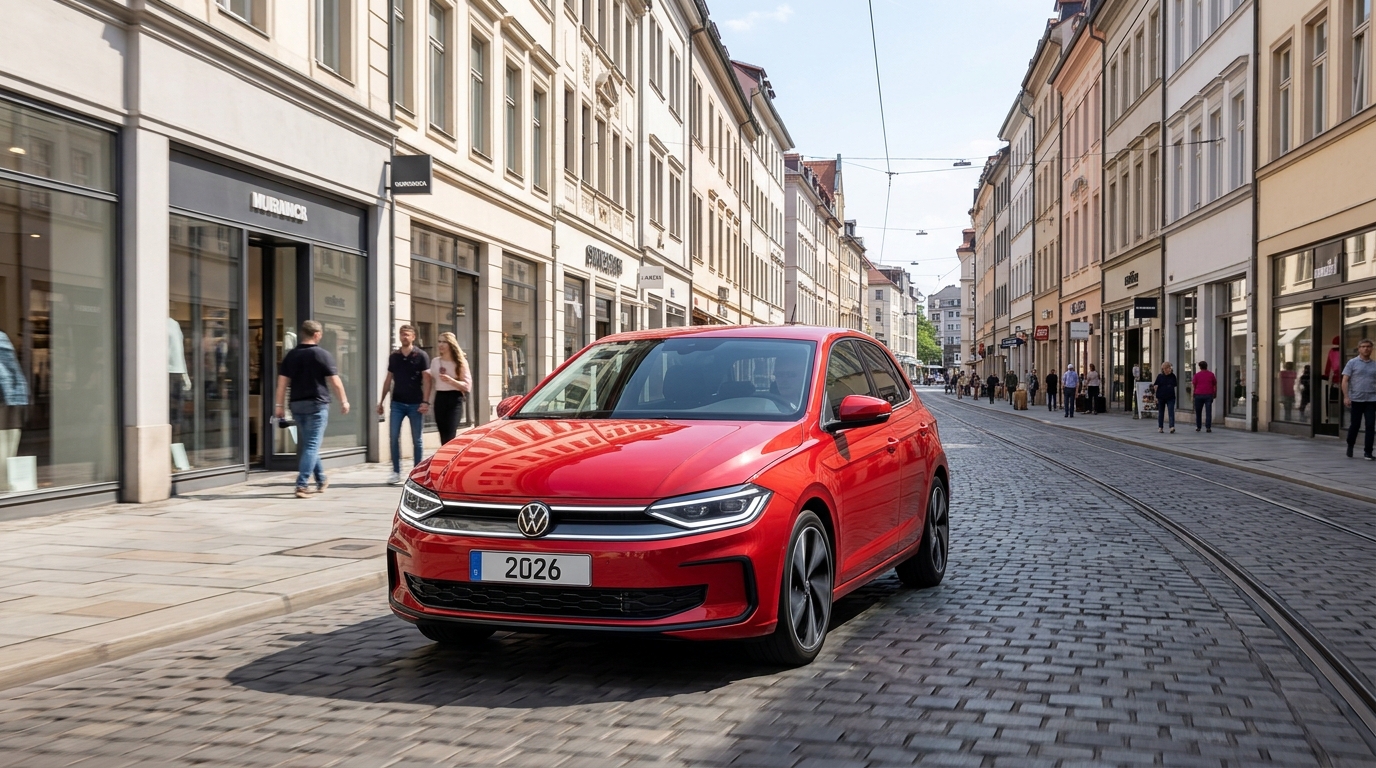
The Volkswagen Polo entry trim—often badged as the Life—proves that choosing a base-model hatchback doesn’t mean settling for cheap compromises. It balances sensible engineering, low running costs, and everyday practicality into a clean, modern package.
Understated Design & Exterior Essentials
While higher trims sport sporty body kits or flashy contrast accents, the base Polo keeps things clean and functional:
- Sleek Lighting: Comes equipped with full LED headlights as standard for strong nighttime visibility.
- Wheels: Fitted with 15-inch alloy wheels, delivering a comfortable ride over rough urban pavement.
- Body Styling: Clean lines, body-colored door handles, and a tidy front grille retain Volkswagen’s signature understated look.
Interior & Practicality
Inside, the base Polo prioritises durability, clean layout design, and easy everyday usability.
- Cockpit Tech: Features a digital instrument cluster alongside a central infotainment touchscreen with smartphone integration.
- No-Nonsense Cabin: Sturdy cloth upholstery, manual climate controls, and a straightforward layout built to withstand daily wear.
- Boot Capacity: Offers 351 litres of luggage space with the rear seats up, expanding to 1,125 litres when folded.
Engine & Efficiency
The base model relies on an efficient three-cylinder petrol engine tuned specifically for city commutes and economical cruising.
| Feature | Base Model Specs |
| Engine Type | 1.0-Liter 3-Cylinder Turbocharged Petrol (TSI) |
| Power Output | 95 PS (94 hp) |
| Transmission | 5-Speed Manual or 7-Speed DSG Automatic |
| Fuel Economy | ~5.2–5.4 L / 100 km (Combined) |
For budget-conscious buyers seeking German build quality, safety features, and a relaxed ride without paying a premium for trim extras, the base VW Polo remains a smart, dependable choice.

The Volkswagen Polo Life serves as the entry point to VW’s core hatchback range. Combining modern digital tech with classic small-car proportions, a thorough road test reveals whether this foundational trim level delivers real-world driving value.
Engine & Driving Dynamics
Under the bonnet, the Polo Life features Volkswagen’s ubiquitous 1.0-litre turbocharged 3-cylinder TSI petrol engine.
- Power & Acceleration: Generating around 85kW (114 hp) and 200Nm of torque, the engine punches above its displacement weight once the turbo spools.
- Gearbox Calibration: Paired with either a 5-speed manual or a 7-speed DSG automatic, power delivery is eager. The automatic setup can feel slightly hesitant at low crawling speeds, but quickly smooths out on the move.
- Handling & Ride Quality: Riding on standard 15-inch alloy wheels, the suspension leans toward comfort. It absorbs urban bumps easily, while maintaining signature German highway composure and stability.
Cabin Practicality & Technology
The interior avoids feeling like a stripped-down basic specification, integrating plenty of modern amenities.
- Digital Cockpit: Standard features include an 8.0-inch Digital Cockpit cluster paired with a centre infotainment screen supporting Apple CarPlay and Android Auto.
- Seating & Comfort: Durable cloth upholstery offers good support, and logical dashboard physical controls make adjustment effortless.
- Storage Space: A 351-litre luggage compartment easily handles daily errands and weekend bags.
Road Test Summary
| Metric | VW Polo Life Specification |
| Engine | 1.0L 3-Cylinder Turbo Petrol (TSI) |
| Output | 85 kW / 200 Nm |
| Transmission | 5-Speed Manual or 7-Speed DSG Auto |
| Claimed Fuel Use | ~5.4 L / 100 km |
| Boot Capacity | 351 Litres |
The Volkswagen Polo Life remains a refined choice for drivers wanting a comfortable, quiet, and secure hatchback experience without paying the top-tier trim premium.

Premier League Matchday 8

November PlayStation Plus Lineup


You must be logged in to post a comment Login