
Classic Cars
The History of Maserati

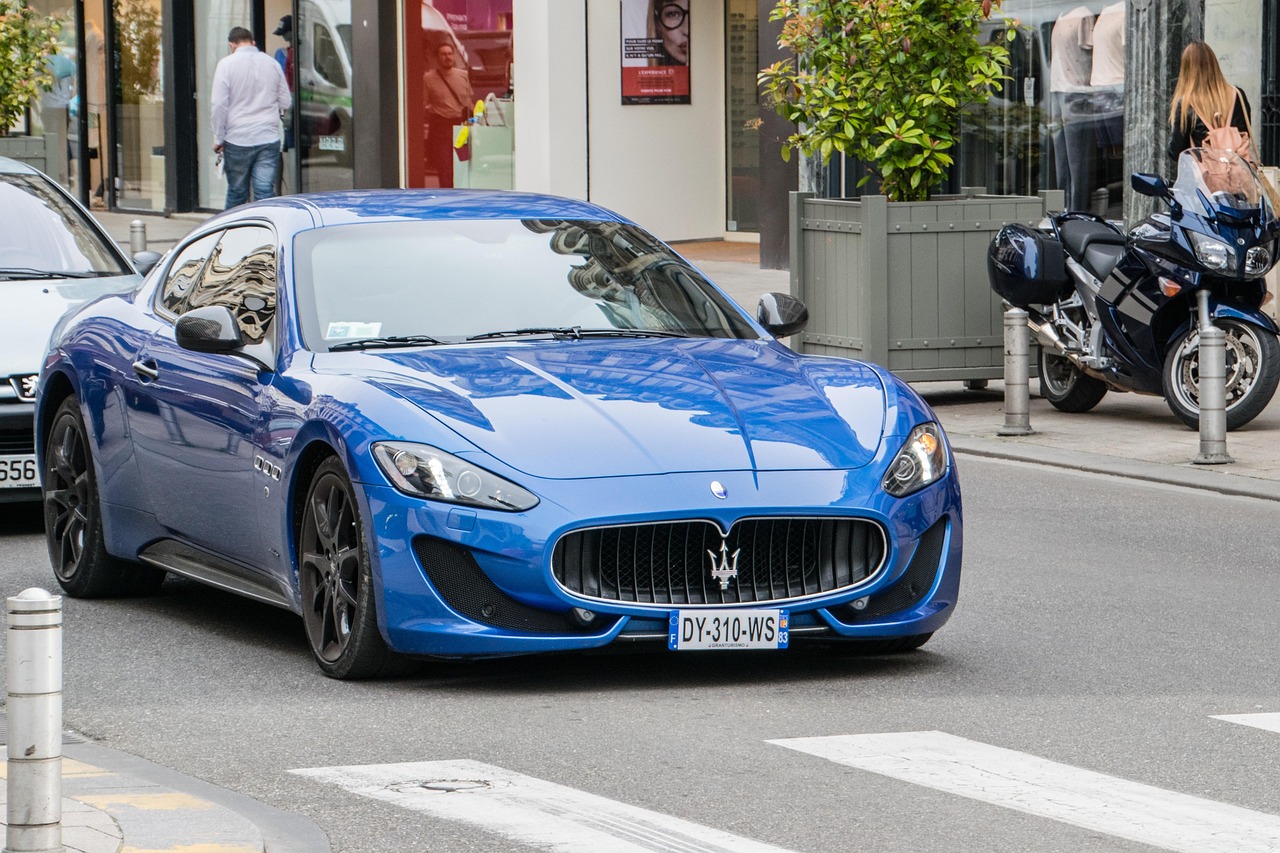
The History of Maserati: From Racing Pioneer to Modern Luxury Icon
Few names in the automotive world evoke as much passion, heritage, and pure Italian elegance as Maserati. Instantly recognisable by its iconic Trident emblem, the Modena-based marque has spent over a century balancing high-performance motorsport engineering with handcrafted luxury GT touring.
From its humble beginnings in a small Bologna workshop to dominating World Championship Formula 1 tracks and transitioning into the modern era of electrification, here is the complete story of Maserati’s evolution.
1. The Founding Brothers and the Birth of the Trident (1914–1930s)
Maserati was officially founded in Bologna, Italy, on December 1, 1914, by brothers Alfieri, Ettore, and Ernesto Maserati. Raised with a deep fascination for mechanics and high-speed engines, the brothers initially operated as a specialised garage building race cars for Diatto.
When Diatto suspended its motorsport program in 1926, the Maserati brothers built their very first original race car: the Tipo 26. Driven by Alfieri Maserati himself, the Tipo 26 won its class at the gruelling Targa Florio in 1926, establishing the brand’s reputation overnight.
1914: Workshop Founded ➔ 1926: First Car (Tipo 26) ➔ Trident Logo Designed by Mario Maserati
The Origin of the Trident Logo
Unlike his mechanically minded brothers, Mario Maserati was an artist. He designed the brand’s legendary logo based on the Fountain of Neptune located in Bologna’s Piazza Maggiore. The Trident symbolised strength, vigour, and Neptune’s control over the sea, rendered in Bologna’s traditional red and blue colours.
2. The Golden Era of Grand Prix & Le Mans (1930s–1950s)
Tragedy struck in 1932 when visionary founder Alfieri Maserati passed away following complications from a racing crash. In 1937, the surviving brothers sold their shares to industrialist Adolfo Orsi, who relocated the company headquarters to Modena, Italy—where Maserati remains based to this day.
Historic Racing Achievements
- Indy 500 Dominance (1939 & 1940): Maserati became the first and only Italian manufacturer to win the Indianapolis 500 back-to-back with the supercharged Maserati 8CTF (nicknamed the “Boyle Special”).
- Formula 1 World Championship (1957): The breathtaking Maserati 250F is widely regarded as one of the greatest Grand Prix cars ever built. Argentine racing legend Juan Manuel Fangio drove the 250F to a legendary victory at the 1957 German Grand Prix at Nürburgring, capturing his fifth F1 World Championship title.
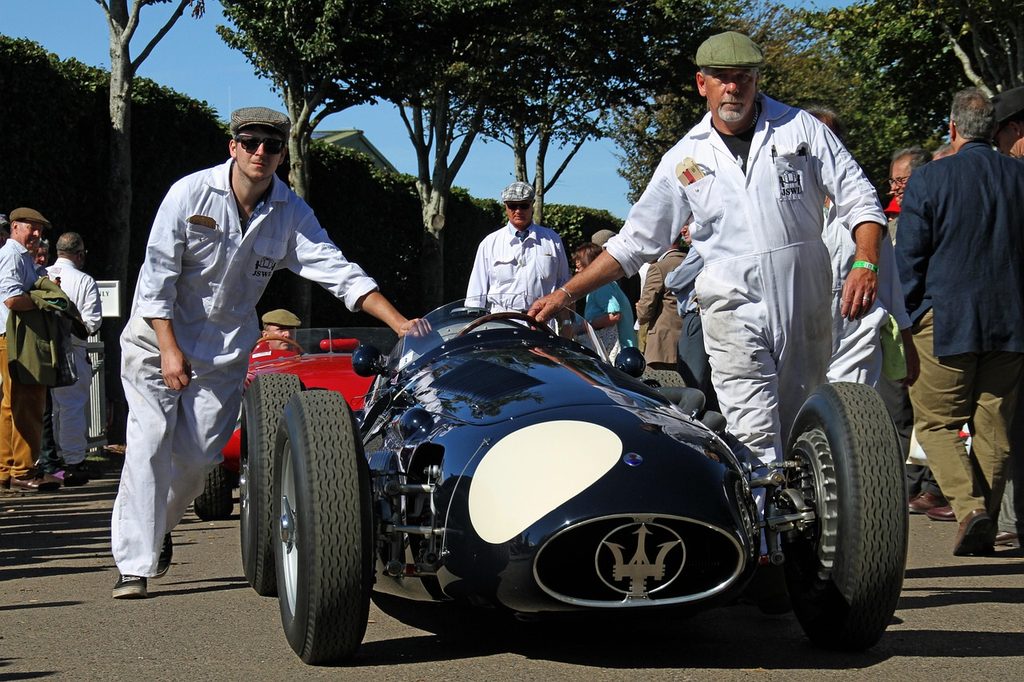
3. Shifting to Road Cars: The Birth of the Grand Tourer (1947–1970s)
Following its success on the track, Maserati pioneered the concept of the high-performance Grand Tourer (GT)—a car capable of combining race-bred engines with long-distance luxury.
Iconic Road Models
- Maserati A6GCS & 3500 GT (1957): The 3500 GT was Maserati’s first mass-produced road car. Featuring aluminium bodywork by Touring Superleggera and a 3.5-litre inline-6 engine derived from racing, it proved to be a massive commercial success.
- Maserati Sebring & Mistral (1960s): Continued the brand’s tradition of naming road cars after famous winds (a tradition that later inspired the Ghibli, Bora, Khamsin, and Levant).
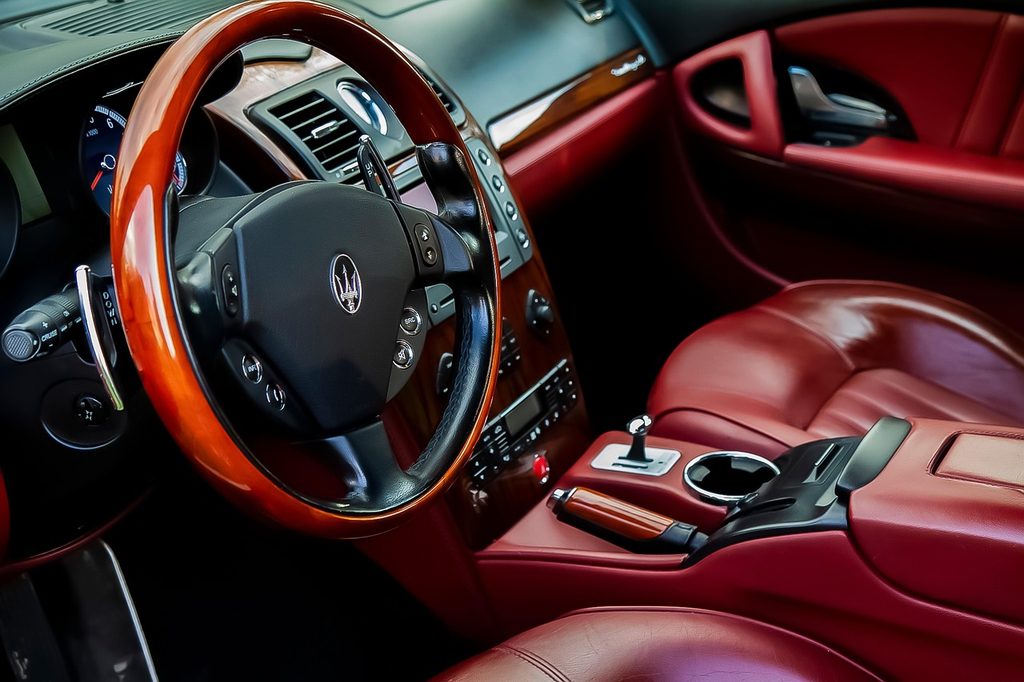
- Maserati Quattroporte (1963): Pioneered an entirely new vehicle segment: the world’s fastest four-door luxury sedan. Fitting a race-derived V8 engine inside a stylish sedan body created an instant flagship.
- Maserati Ghibli (1967): Styled by Giorgetto Giugiaro, the original Ghibli coupe stood out with its long bonnet, pop-up headlights, and 174 mph top speed, rivalling the Ferrari Daytona and Lamborghini Miura.
4. Ownership Changes: Citroën, De Tomaso, and Ferrari
The 1970s brought economic instability, oil crises, and changing automotive ownership:
| Era | Owner / Corporate Structure | Major Milestones & Models |
| 1968–1975 | Citroën Era | Introduced mid-engine supercars like the Bora and Merak, incorporating Citroën’s hydraulic brake and suspension systems. |
| 1975–1993 | De Tomaso Era | Managed by Alejandro de Tomaso. Shifted toward twin-turbocharged, smaller engines with the Biturbo line, boosting sales volume but struggling with reliability perception. |
| 1993–2004 | Fiat & Ferrari Integration | Fiat purchased Maserati in 1993 and later transferred 50% ownership to arch-rival Ferrari in 1997. Ferrari overhauled production quality, leading to the acclaimed 3200 GT and Coupe/Cambiocorsa. |
Citroën Era (1968) ➔ De Tomaso (1975) ➔ Fiat & Ferrari Era (1990s) ➔ Stellantis Group
5. Modern Resurgence: The MC12 and Global Expansion
Under Ferrari management and subsequent integration into Fiat Chrysler Automobiles (FCA), Maserati entered a major rebirth.
The MC12 Hypercar (2004)
To mark its return to GT racing after a 37-year absence, Maserati created the hypercar MC12. Based on the Ferrari Enzo chassis but featuring a distinct aerodynamic body, only 50 road-going units were produced. The MC12 dominated the FIA GT Championship, winning multiple titles.
Expanding the Modern Lineup
Throughout the 2010s, Maserati scaled up global production by expanding its portfolio:
- GranTurismo & GranCabrio (2007–2019): Designed by Pininfarina, featuring naturally aspirated Ferrari-built V8 engines with an unforgettable exhaust note.
- Ghibli (Executive Sport Sedan): Reintroduced in 2013 to compete against mid-size European luxury sedans.
- Levante (2016): Maserati’s first-ever production SUV, bringing Italian styling and active air suspension to the luxury SUV market.
6. Maserati Today: The Nettuno Engine and Folgore Electrification
Now operating under the Stellantis group, Maserati has launched an ambitious new era focused on bespoke supercar engineering and full electrification.
The MC20 Supercar & Nettuno Engine
In 2020, Maserati unveiled the MC20 (Maserati Corse 2020), marking a return to 100% in-house engineering at Modena. At its heart sits the groundbreaking Nettuno engine—a 3.0-litre twin-turbo V6 utilising Formula 1-derived pre-chamber combustion technology to produce over 620 horsepower.
The Folgore Era (Full Electrification)
Maserati is leading the Italian luxury market into electric mobility under its Folgore (Italian for “Lightning”) badge:
- GranTurismo Folgore: A tri-motor, 800-volt electric GT delivering over 750 horsepower and 0–60 mph acceleration in roughly 2.7 seconds.
- Grecale Folgore: A fully electric compact luxury SUV.
- GranCabrio Folgore: The luxury sector’s first all-electric convertible.
Summary Timeline
1914 ── Maserati founded in Bologna by the Maserati brothers.
1926 ── First official car, the Tipo 26, wins its class at Targa Florio.
1939 ── Wins the Indianapolis 500 (repeated in 1940).
1957 ── Fangio wins F1 Championship in 250F; 3500 GT launches luxury GT era.
1963 ── First-generation Quattroporte revolutionizes sports sedans.
2004 ── MC12 supercar claims FIA GT Championship dominance.
2020 ── MC20 supercar debuts featuring the in-house Nettuno V6 engine.
2024+─ Full transition toward Folgore electric powertrains across the entire lineup.
From its roots on 1920s dirt ovals to modern electric grand tourers, Maserati remains defined by its core philosophy: “Exceptional Everyday”—delivering race-bred performance wrapped in unmistakable Italian style.


Classic Cars
The Icon of an Era: History, Specifications, and Performance of the Jaguar E-Type
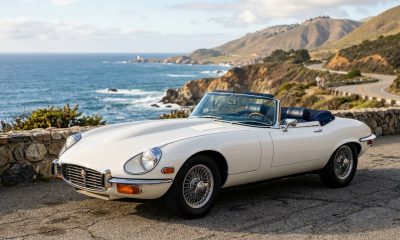
When the Jaguar E-Type (sold in North America as the XK-E) debuted at the Geneva Motor Show on March 15, 1961, it reshaped the automotive landscape overnight.
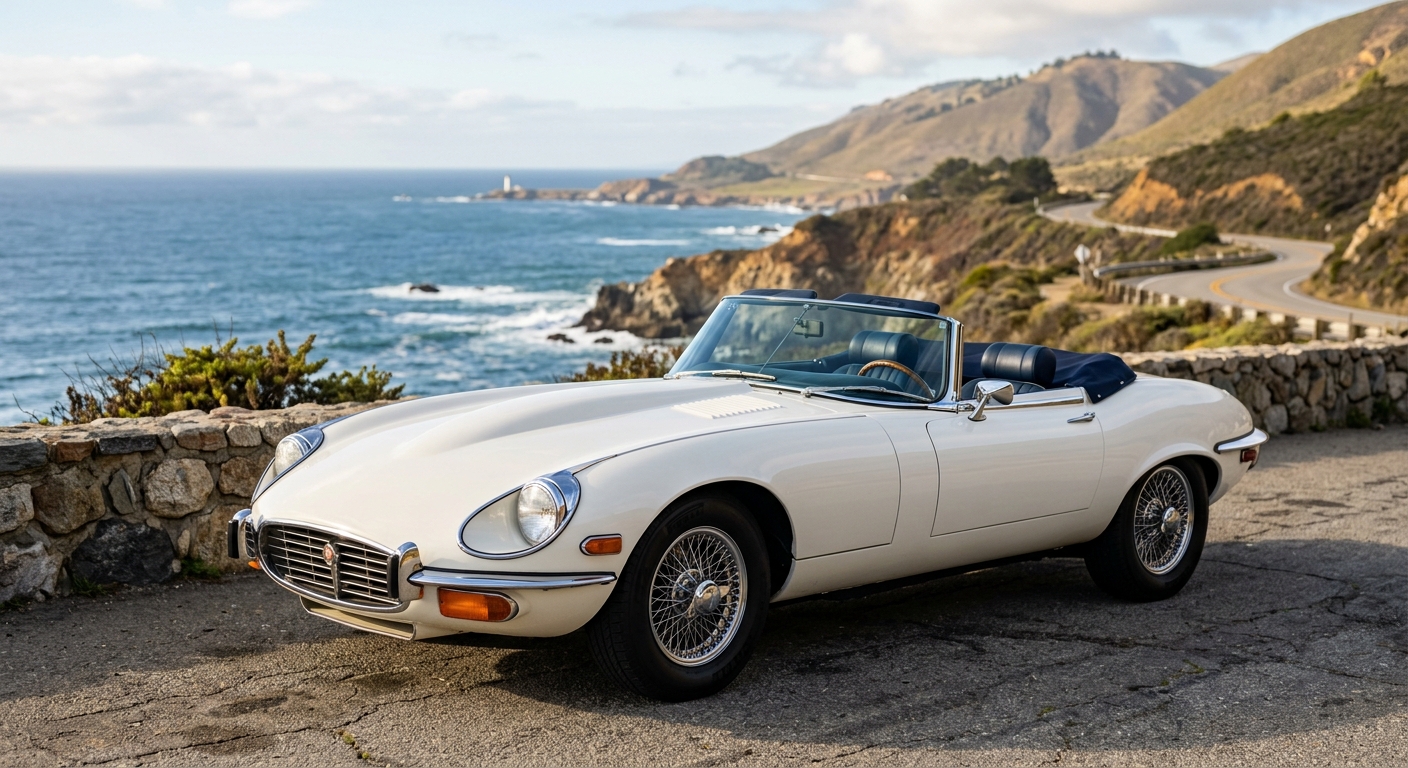
When the Jaguar E-Type (sold in North America as the XK-E) debuted at the Geneva Motor Show on March 15, 1961, it reshaped the automotive landscape overnight. Designed by aerodynamicist Malcolm Sayer using principles honed on Jaguar’s Le Mans-winning D-Type, its long bonnet, sweeping curves, and faired-in headlights famously prompted Enzo Ferrari to call it “the most beautiful car ever made.”
Beyond its striking looks, the E-Type offered supercar performance—a claimed 150 mph top speed—at a fraction of the price of contemporary Italian or British rivals.
Production Years and Generations
The E-Type was manufactured continuously from 1961 through 1974 across three distinct generations.
- Series 1 (1961–1968): The purest realisation of Sayer’s design, featuring glass-covered headlights, smooth body lines, and toggle switches inside. Early cars (1961–1964) utilised a 3.8-litre engine and a non-synchromesh first gear “Moss” transmission. In late 1964, Jaguar upgraded to a 4.2-litre engine and a fully synchromesh gearbox. A 2+2 coupe with an extended wheelbase arrived in 1966.
- Series 1.5 (1967–1968): A transitional, unofficial designation for cars modified to meet emerging US safety and emissions standards. Distinctive features included exposed headlights (no glass covers) and revised cabin switches.
- Series 2 (1968–1971): Fully compliant with US regulations, Series 2 models introduced open headlights, a larger front grille, wrap-around rear bumpers, twin electric cooling fans, and improved interior ergonomics.
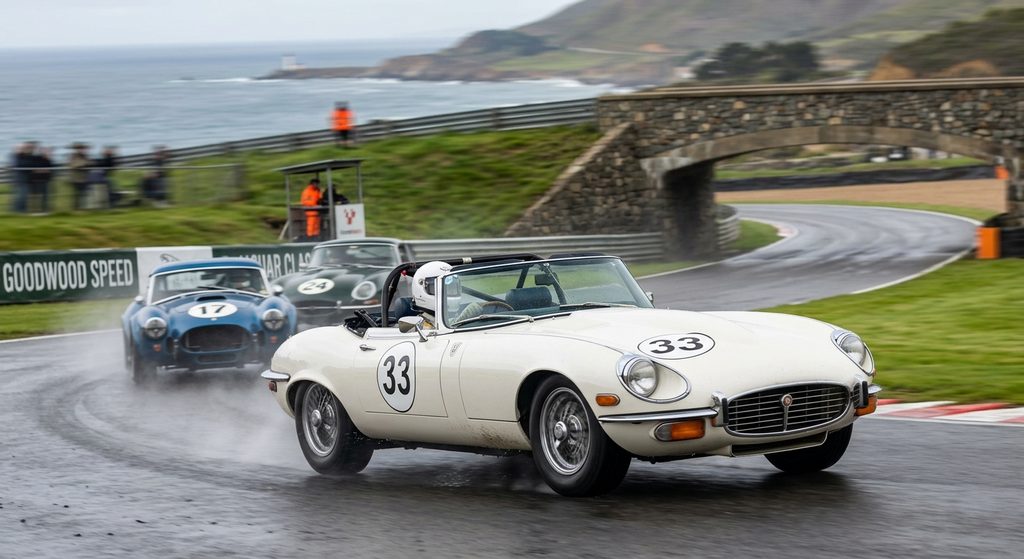
- Series 3 (1971–1974): The final evolution saw the E-Type mature into a grand tourer. Powered by an all-new 5.3-litre V12, Series 3 cars featured a broader front grille, flared wheel arches, uprated brakes, and standard power steering. The short-wheelbase coupe was retired, leaving only the 2+2 coupe and the long-wheelbase roadster.
Technical Specifications & Performance Data
| Specification | Series 1 (3.8L) | Series 1 & 2 (4.2L) | Series 3 (5.3L V12) |
| Years Built | 1961–1964 | 1964–1971 | 1971–1974 |
| Engine Type | 3.8L Inline-6 (XK) | 4.2L Inline-6 (XK) | 5.3L V12 |
| Displacement | 3,781 cc | 4,235 cc | 5,343 cc |
| Horsepower | ~265 bhp @ 5,500 rpm | ~265 bhp @ 5,400 rpm | ~272 bhp @ 5,850 rpm |
| Torque | ~260 lb-ft @ 4,000 rpm | ~283 lb-ft @ 4,000 rpm | ~304 lb-ft @ 3,600 rpm |
| Transmission | 4-speed manual | 4-speed manual / 3-speed auto (2+2) | 4-speed manual / 3-speed auto |
| 0–60 mph Time | ~6.9 seconds | ~6.5 seconds | ~6.4 seconds |
| Top Speed | ~150 mph (241 km/h) | ~150 mph (241 km/h) | ~145 mph (233 km/h) |
| Curb Weight | ~2,900 lbs (1,315 kg) | ~3,020 lbs (1,370 kg) | ~3,360 lbs (1,525 kg) |
Engineering Innovations
The E-Type’s legendary performance was built on three foundational technologies advanced for their time:
- Monocoque Construction: Unlike the heavy ladder-frame chassis common in 1961, the E-Type used a lightweight central monocoque tub attached to a tubular steel front subframe carrying the engine and front suspension.
- Independent Rear Suspension (IRS): Designed by Bob Knight, Jaguar’s IRS used double wishbones, twin coil springs, and inboard disc brakes. This system delivered unmatched road-holding and ride quality, remaining a Jaguar hallmark for decades.
- Four-Wheel Disc Brakes: Standard servo-assisted disc brakes on all four wheels provided stopping power far superior to the drum setups found on contemporary competitors.
Legacy
Over its 14-year production life, more than 70,000 E-Types were produced. Today, it remains a symbol of 1960s British design, held in the permanent collection at the Museum of Modern Art (MoMA) in New York as a classic piece of industrial design art.
Classic Cars
Driving Through Time: The Story of the British Motor Corporation (BMC)
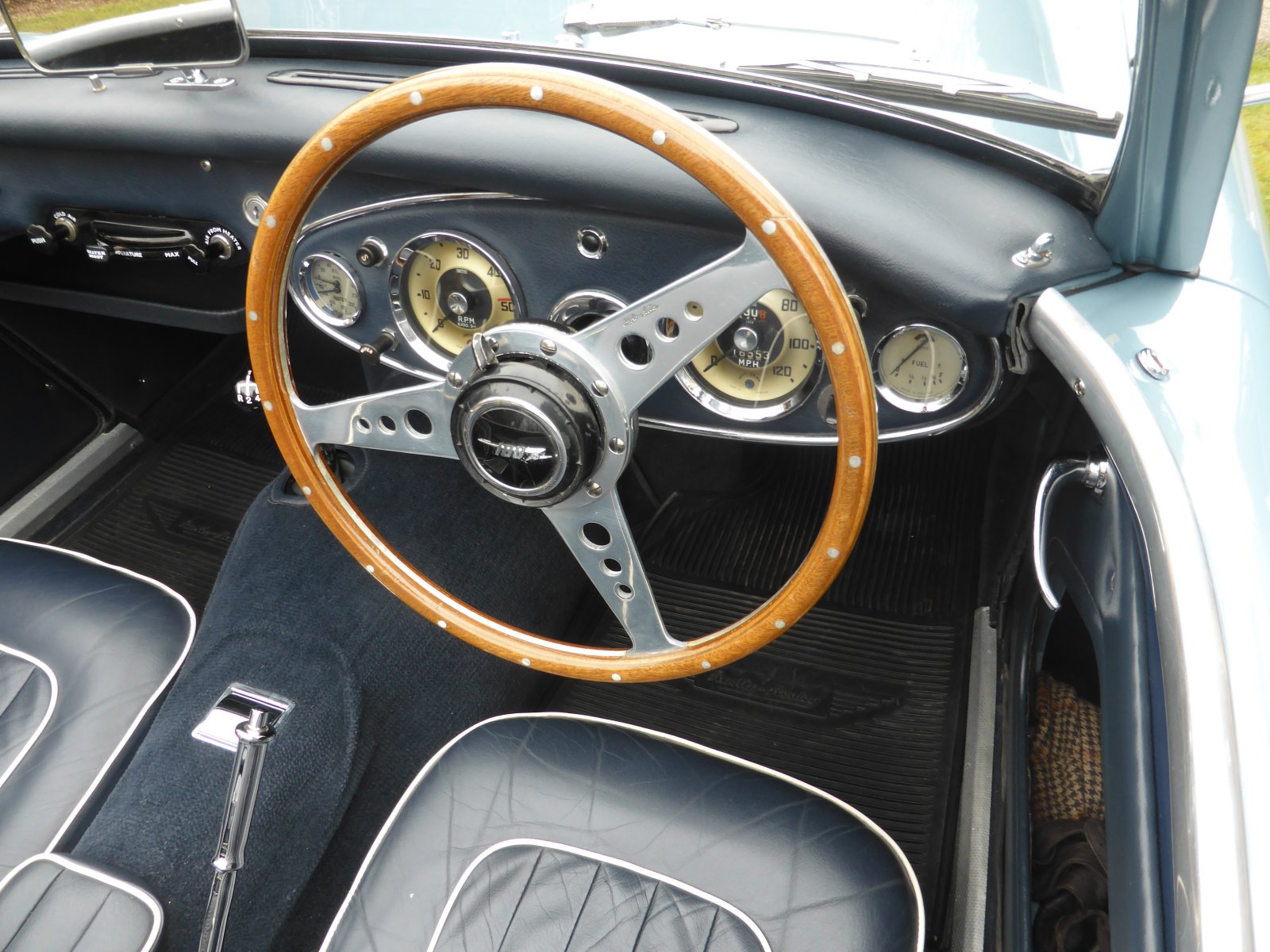
If you’ve ever admired a classic Mini nipping through city streets or swooned over a vintage Austin-Healey, you’ve crossed paths with the legacy of the British Motor Corporation BMC
The Story of the British Motor Corporation (BMC)
If you’ve ever admired a classic Mini nipping through city streets or swooned over a vintage Austin-Healey, you’ve crossed paths with the legacy of the British Motor Corporation (BMC).
Formed in the optimistic post-war era, BMC was once the beating heart of the UK automotive industry—a titan born from necessity, driven by innovation, and eventually reshaped by a changing global market.
The Birth of a Titan (1952)
In 1952, British car manufacturing reached a historic turning point. Two long-standing, fierce rivals—the Austin Motor Company and the Morris Organisation (Nuffield Organisation)—decided to join forces.
- The Goal: To pool resources, dominate the domestic market, and aggressively compete against American giants like Ford and General Motors globally.
- The Result: BMC instantly became the largest car manufacturer in Britain, controlling over 39% of the UK auto market at its peak.
Innovation and Icons: The Mini Era
The true defining moment for BMC arrived in 1959 under the brilliant mind of designer Sir Alec Issigonis.
Faced with fuel shortages caused by the Suez Crisis, BMC launched the revolution on wheels: the Mini (initially sold as both the Austin Seven and Morris Mini-Minor).
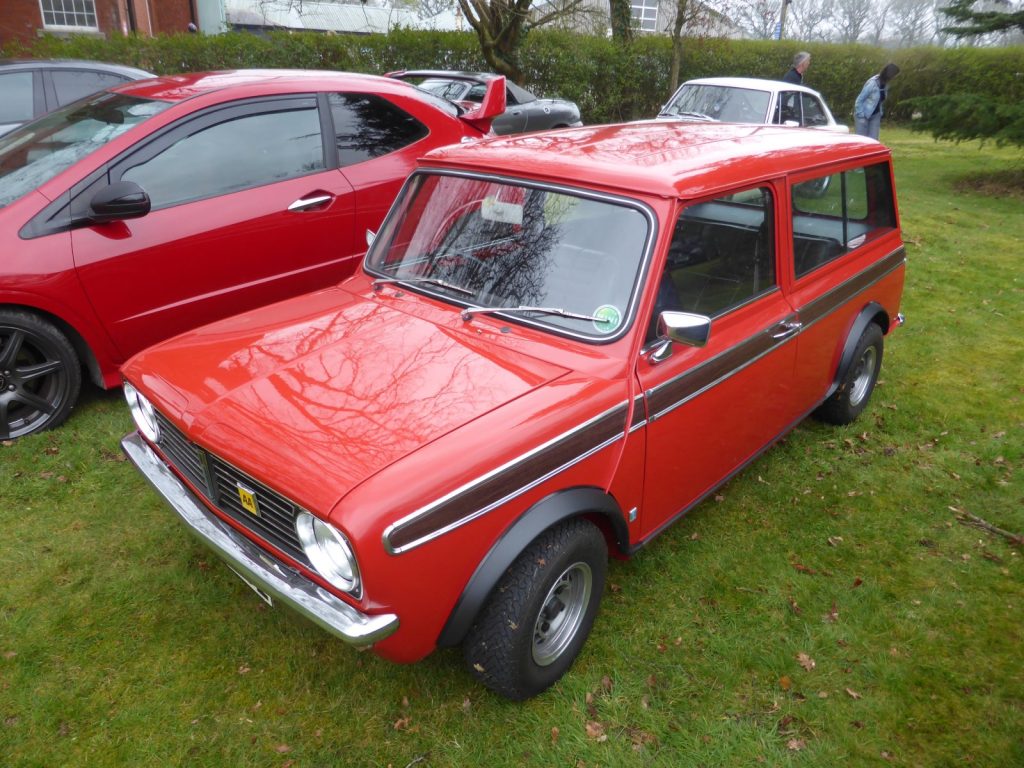
With its space-saving transverse engine and front-wheel-drive layout, the Mini didn’t just change small-car design forever—it became an enduring cultural icon of the “Swinging Sixties.” Along with affordable sports cars like the Austin-Healey Sprite and the MGB, BMC defined the British motoring aesthetic across the globe.
Mergers and the Final Lap
While BMC produced some of the world’s most beloved vehicles, it also faced internal challenges. Badge engineering (selling virtually identical cars under different brand names) created internal competition between its own dealerships, and labour unrest in the 1960s put pressure on production.
To stay competitive, BMC expanded and merged:
- 1966: BMC merged with Jaguar Cars to form British Motor Holdings (BMH).
- 1968: BMH merged with the Leyland Motor Corporation, giving birth to the sprawling state-influenced giant, British Leyland (BL).
Though the BMC name eventually faded into industrial history, its DNA paved the way for modern automotive engineering.
Every Brand Under the BMC Umbrella
Throughout its run, BMC owned, created, or manufactured vehicles under a legendary roster of marques. Here is the full list of brands that fell under the BMC umbrella:
Core Founding Brands
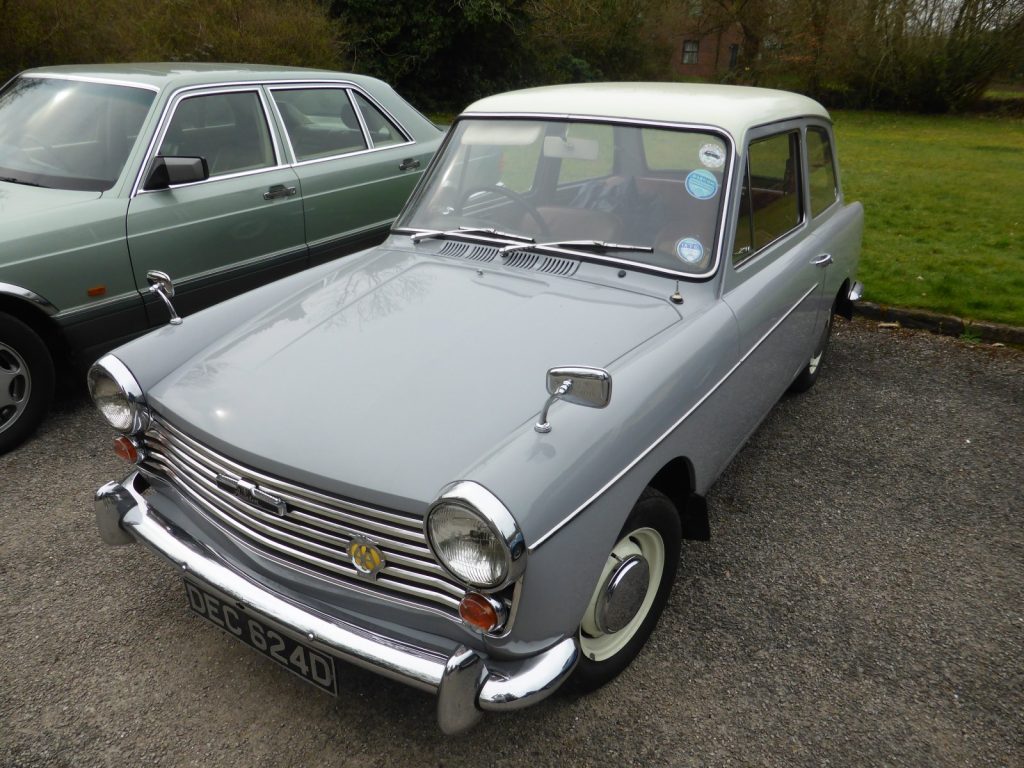
- Austin
- Morris
Nuffield / Heritage Marques
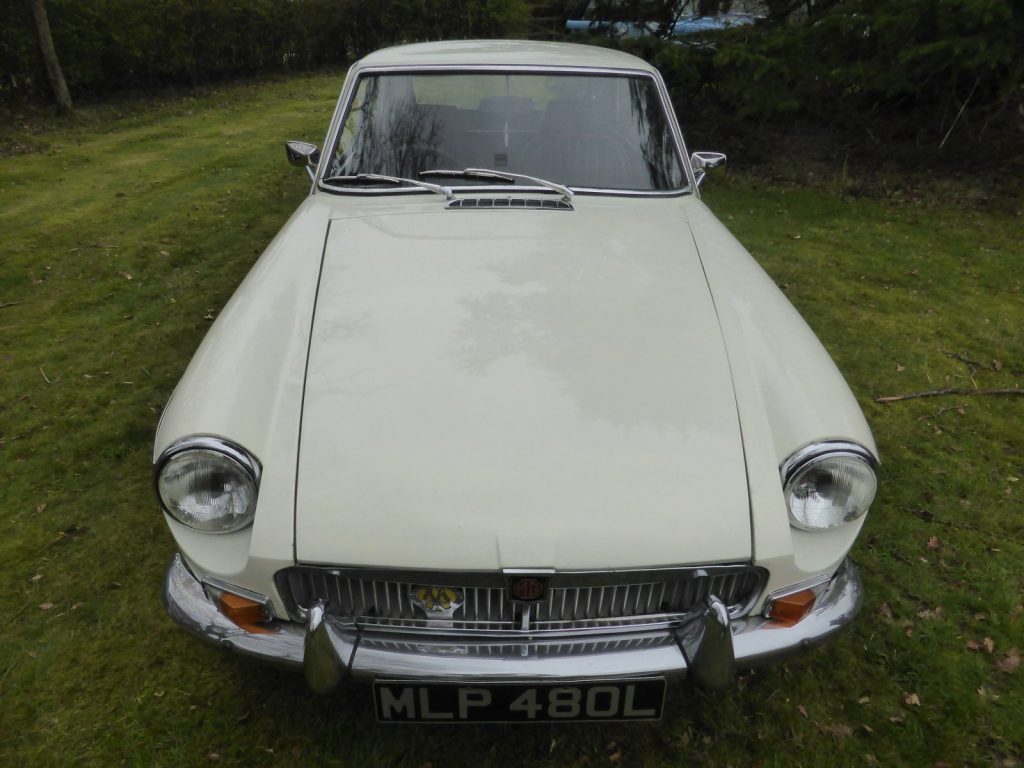
- MG (Morris Garages)
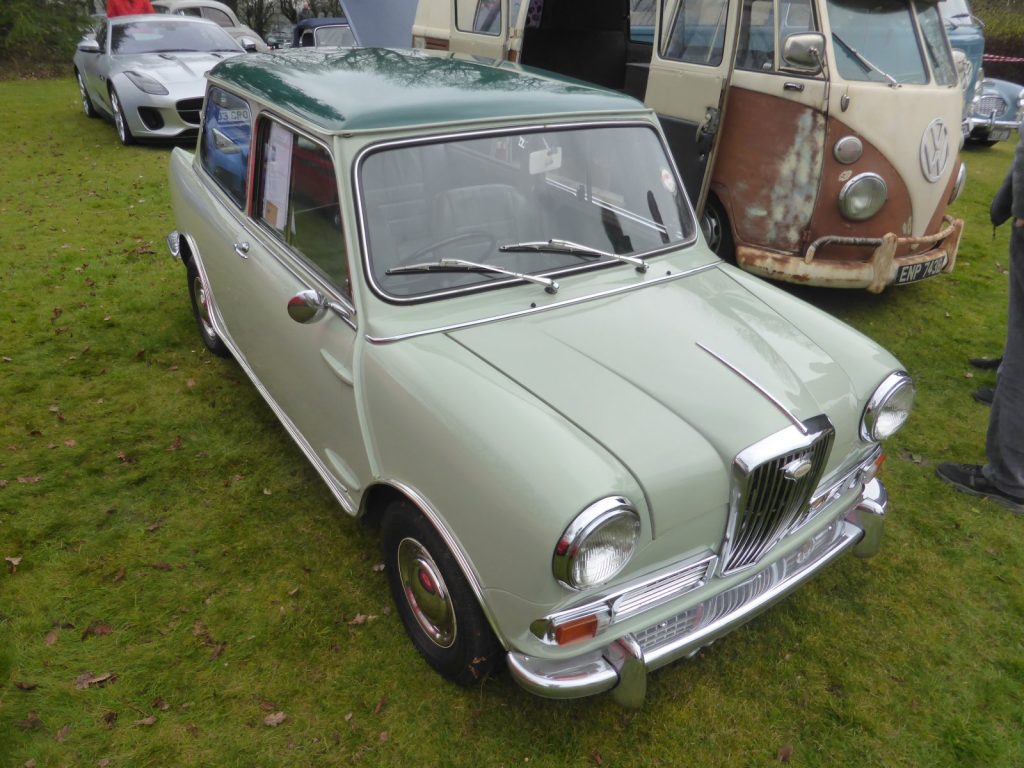
- Riley
- Wolseley
Joint-Ventures & Specialised Marques
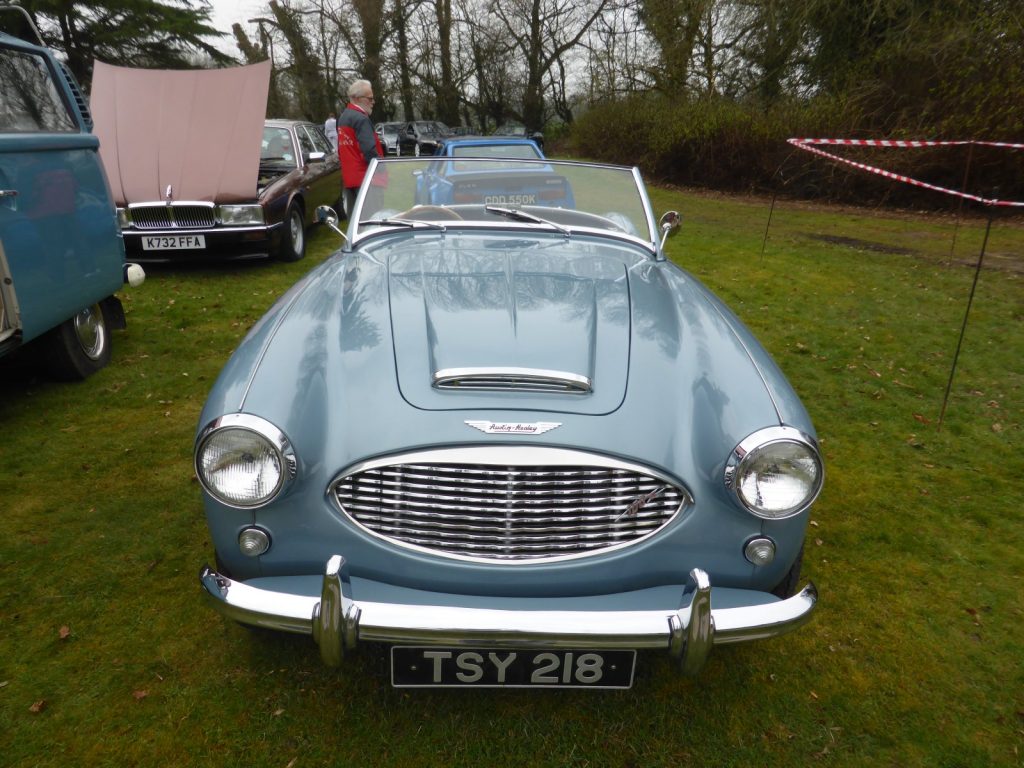
- Austin-Healey (Specialised sports car collaboration with Donald Healey)
- Vanden Plas (Luxury coachbuilder arm turned high-end trim brand)
- Princess (Initially high-end Austin/Vanden Plas models before briefly becoming its own standalone marque under BL)
Commercial & Agricultural
- BMC (Used directly as a brand for commercial trucks, vans, and tractors)
- Metropolitan (Imported/marketed in collaboration with Nash/American Motors)
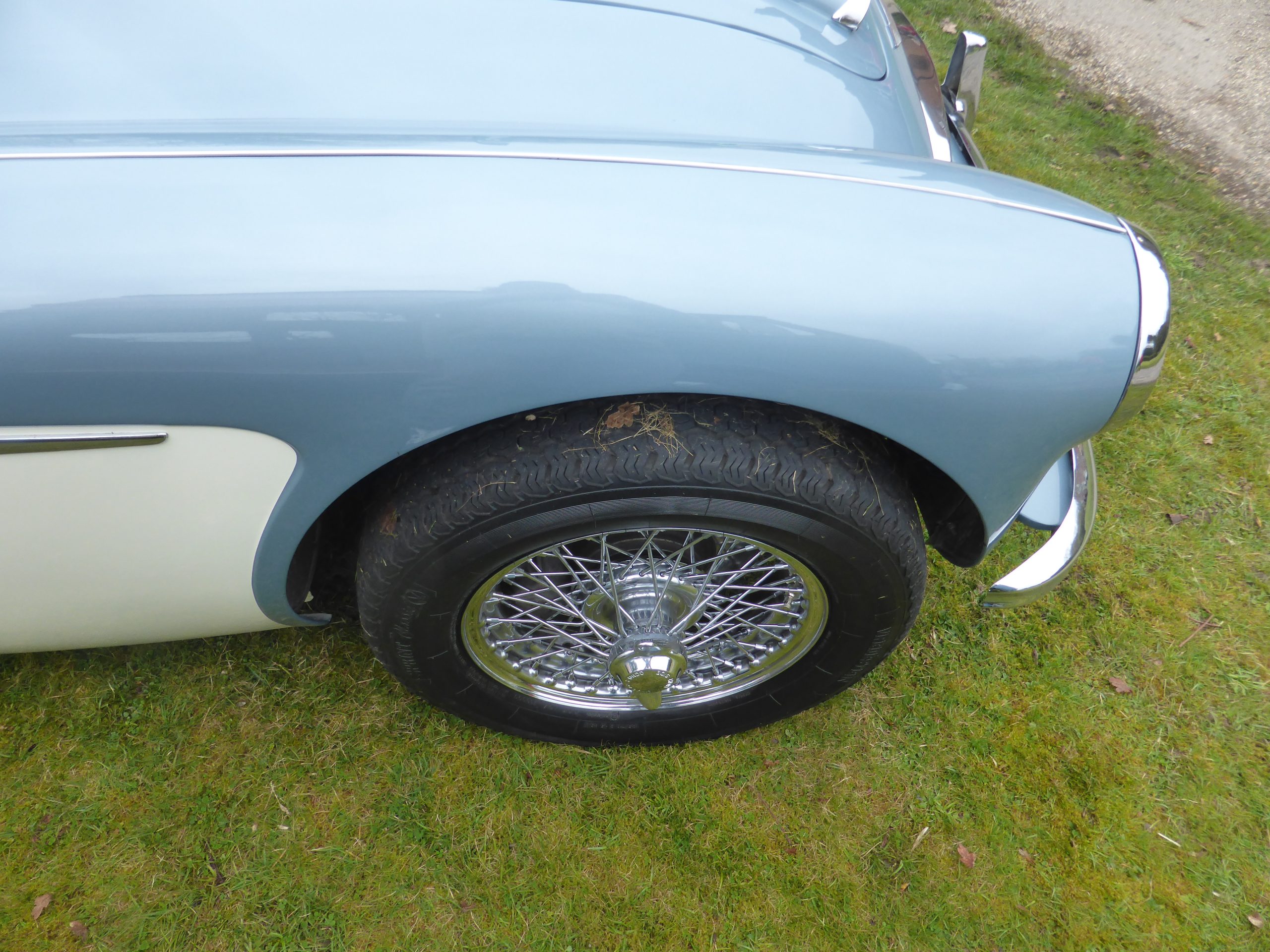
Are you a petrol head and love the thought of owning a classic car? These days it can be quite cheap to run a classic car with no Tax after 40 years old. A classic car is MOT exempt, allowing you time to make minor repairs. So, what’s involved in owning a classic or vintage car?
Looking at buying your first classic can be a minefield. These are old cars and, in their heyday, rotted away. Think about what make and model you fancy and do research on forums for that model. Start a thread where to look for rot. Some cars, like Mini or MG, have a massive following and masses of new and used spare parts.
When you view a vehicle, check everywhere. Take your time and find the rust in the areas that the forum members said. It’s not like looking at a modern car. Floors and chassis are so important to check. Because these are old cars, take a magnet and a cloth to check for filler. You wrap the magnet in a cloth and run it over paintwork. Bottom of doors, wings and arches are prone to rust.
So, you have checked the exterior and tyres, now check the interior. Check seats, belts, heater, dash and instruments. Check all electrics inside and out, lights, indicators, etc.
Now under the bonnet. It could be a dirty one, but a steam cleaner will sort that. Check the engine for oil leaks and look underneath for any. Check the engine running for rattles, knocks, or just funny noises. The suggestion is, if you know a mechanic friend, ask if they can come with you.
If possible, take it for a test drive. Most classics are not power-steered or do not have good brakes so be careful. Again, you are looking for unusual noises, pulling or squeaking.
Now, as the classic car you’re looking at is MOT exempt, you can check within reason when it was last MOT’d. Some classic owners get their cars MOT’d regularly, and some when they sell their car. It’s a bonus when you buy a car that’s got a current MOT.
Remember, though it’s an old car. You need parts availability. eBay can be a good source of scarce parts for classics. As we have said, Mini and MG parts are plentiful, new and used.
This is not a complete guide by any means, but it gives you an idea where to start.
The classic car scene is plentiful in spring and autumn. Search Google to find your local clubs, shows and most of all, enjoy your classic.

PlayStation Plus Free Games for November

The History of Maserati

Premier League Matchday 8


-

 Government3 weeks ago
1200 More Illegal Immigrants In 8 Days
-
 Motorsport3 weeks ago
Le Mans History: The 24 Hours Race From 1923 to Today
-

 Travel7 days ago
Top 10 Most Expensive Countries for Food, Drink and Accommodation
-

 Consoles4 days ago
November PlayStation Plus Lineup
-
 Football3 days ago
Premier League Matchday 8
-
 Consoles3 hours ago
PlayStation Plus Free Games for November