
Info
Speed Cameras: How They Work and What UK Drivers Should Know


Speed cameras are a familiar sight on UK roads. They appear as bright yellow boxes fixed to grey poles, as white vans at the roadside, and as gantry-mounted cameras above motorway lanes. Their job is to enforce speed limits and reduce collisions, and most drivers will encounter one at some point. But the technology behind them is not always understood.
This guide explains the different types of speed cameras used across the UK, how they record your speed, and why average speed cameras are different from the rest. It also covers where cameras tend to be placed and how you can check your route before you leave.
Safety camera partnerships bring together police forces, local councils and road safety organisations. The Leicester, Leicestershire and Rutland Road Safety Partnership, for example, describes its purpose as providing all the information drivers need about speed and red light cameras in the area. This partnership model is common across much of the UK.
Why Are Speed Cameras Used?
Speed cameras are not scattered across the road network at random. There is a clear logic behind where the fixed sites are placed. Fixed safety camera sites are located where three or more people have been killed or seriously injured in speed-related crashes, over a 1.5km stretch of road.
The aim is simple: to reduce speeding in places where it has already caused serious harm. A worldwide review of studies found that speed cameras led to a reduction of “11% to 44% for fatal and serious injury crashes”. That evidence explains why police forces and road safety partnerships continue to invest in them.
The process is not about raising revenue. Sites are chosen because of a proven history of crashes involving speed, and the aim is to prevent future casualties. That is why the criteria for a fixed site are so specific, and why cameras are not placed on roads without a recorded problem.
The Main Types of Speed Cameras in the UK
There is more than one kind of speed camera, and each works in a slightly different way. The main types are fixed cameras, average speed cameras, mobile cameras and red light cameras.
Fixed Speed Cameras
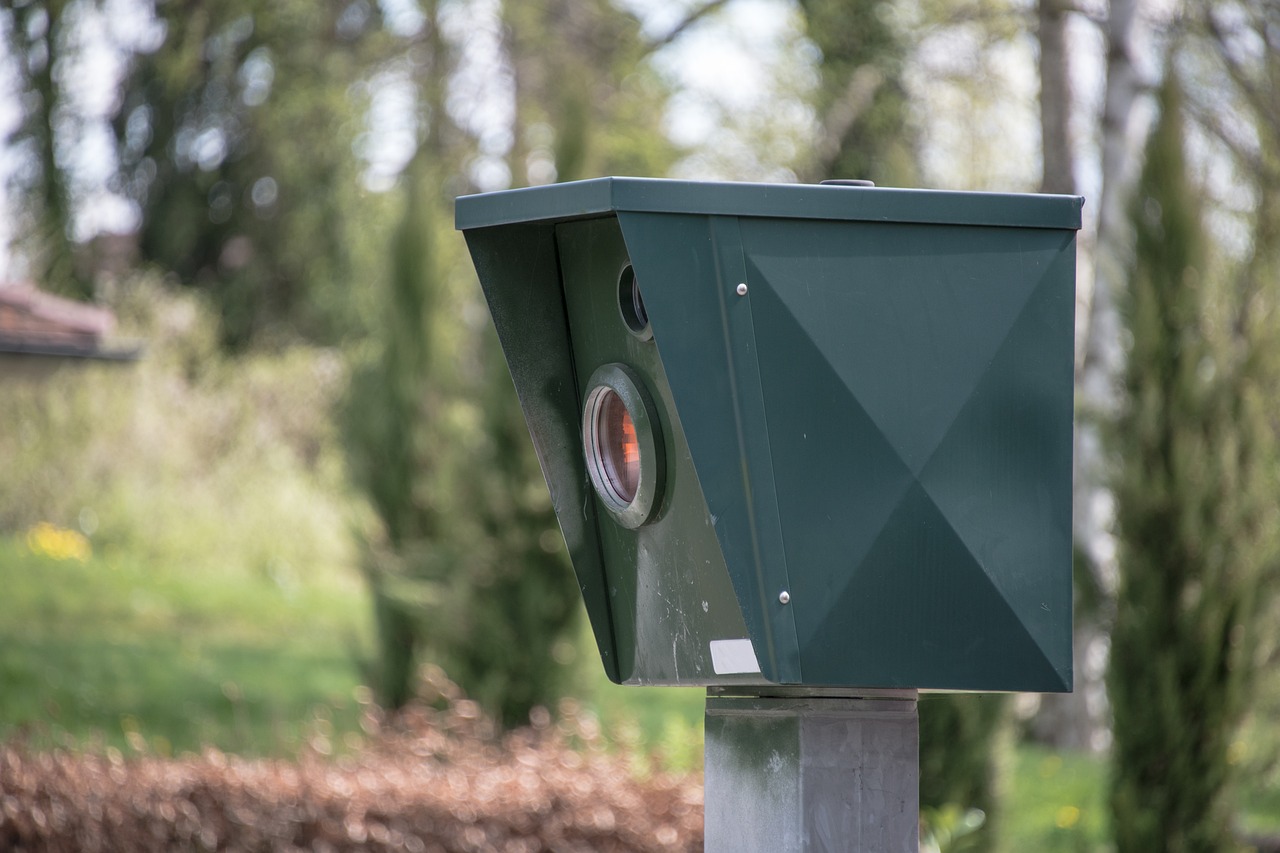
Fixed speed cameras measure the speed of a vehicle at a given point. They are marked yellow and mounted at the roadside on grey-coloured poles. Because they are permanent, drivers usually know where they are, and the cameras act as a constant reminder to keep within the limit.
Average Speed Cameras
Average speed cameras measure a vehicle’s speed over a distance rather than at a single point. They are commonly used around roadworks and on stretches of major road where a temporary limit is in force. When you see a fixed speed limit sign together with an “average speed check” sign, it means vehicles exceeding that speed limit are detected by average speed enforcement cameras.
Mobile Speed Cameras
Mobile cameras are operated from vehicles that can be moved between sites. In Northern Ireland, for example, there are 90 permanently signed locations where 12 safety camera vehicles operate, and the vehicles can be deployed anywhere in the country. West Midlands Police Camera Enforcement Unit is responsible for the operation of both mobile and variable speed cameras in its area.
Red Light and Site Safety Cameras
Some enforcement cameras do more than check speed. Red light and speed camera enforcement is in place in Edinburgh, including at Duddingston Park South at Milton Road West and at A701 Liberton Gardens. These sites may use fixed speed cameras, average speed cameras or site safety cameras, depending on the location and the risks involved.
How Speed Cameras Record Your Speed
Speed cameras record a vehicle’s speed by using detectors in the road or radar technology, depending on the type of camera. Detector-based systems use sensors buried in the road surface. As a vehicle passes over them, the time taken to travel between the sensors gives an accurate speed reading.
Radar technology works differently. The camera unit sends out a signal that bounces off the vehicle as it approaches, and the change in the reflected signal is used to calculate speed. Both methods allow a fixed camera to capture a single, precise reading at the point where the camera is positioned.
When a vehicle is recorded above the limit, the camera captures the evidence needed for enforcement, including the registration plate of the vehicle. The technology used affects how reliable the reading is. Detectors in the road are not affected by weather, and radar units can measure speed from a distance without the vehicle needing to slow down. In both cases, the camera only activates when the recorded speed is above the limit, which reduces the number of images captured.
How Average Speed Cameras Work
Average speed cameras use a completely different method. Instead of measuring speed at one point, they calculate the average speed of a vehicle between two or more camera locations. This is why they are effective on long stretches of roadworks, where drivers might otherwise slow down for one camera and speed up again afterwards.
Provided by National Highways around roadworks on major routes, these cameras work by recording the time a vehicle passes the first camera, and then the time it passes the second camera. The distance between the two is known, so the system can work out the average speed over that stretch. If the average is above the signed limit, enforcement action can follow.
Average speed cameras are equipped with infra-red illuminators and cameras, allowing them to work in all weather conditions, 24 hours a day. Rain, fog, darkness or snow makes no difference to their accuracy, which makes them a reliable choice for enforcing limits at roadworks and through other temporary restrictions.
Average speed cameras are most often associated with roadworks, but they can also be used in other locations. Edinburgh, for instance, includes average speed cameras among its enforcement options, alongside fixed speed cameras and site safety cameras.
Where Speed Cameras Are Located
The location of fixed speed cameras follows strict criteria. Any fixed safety camera site must be on a stretch of road where three or more people have been killed or seriously injured in speed-related crashes over a 1.5km stretch. Local safety camera partnerships publish maps so drivers can see where enforcement is taking place.
The number of cameras varies around the UK. In Northern Ireland, there are three fixed speed cameras, six fixed red light running cameras and three average speed enforcement cameras. There are also 320 active sites in total, 109 of which are permanent. The remaining sites are served by mobile safety camera vehicles that can be deployed anywhere in the region.
Regional partnerships cover different parts of the country. The Kent and Medway Safety Camera Partnership maintains a camera map for its area, while the Leicester, Leicestershire and Rutland Road Safety Partnership provides information about speed and red light cameras and the purpose of its work. Each of these bodies sets its own local approach within national guidance.
The West Midlands takes a similar approach. West Midlands Police Camera Enforcement Unit is responsible for the operation of both mobile and variable speed cameras, as well as average speed cameras.
Are Speed Cameras Effective?
The evidence suggests they are. A worldwide review of studies found that speed cameras led to a reduction of “11% to 44% for fatal and serious injury crashes”. The range depends on the type of camera, the road and how consistently enforcement is applied, but the direction of the results is consistent across multiple studies.
Average speed cameras add another benefit. Because they monitor speed over an entire stretch of road, they encourage drivers to hold a steady, legal speed rather than braking sharply before a single fixed camera and accelerating again afterwards. This produces smoother traffic flow and fewer sudden changes in speed around roadworks.
How to Check Your Route for Speed Cameras
If you are planning a journey and want to know what enforcement is ahead, the UK Speed Camera Map lets you check your route for speed camera locations before you leave. You can zoom in closer to view the cameras in each area. It is a useful way to plan a trouble-free drive.
It is worth remembering that not every camera will appear on a map. Mobile safety camera vehicles can be deployed anywhere, such as the 12 vehicles operating across Northern Ireland’s 90 permanently signed locations. A map shows the known fixed sites, but it cannot guarantee that a mobile van will not be somewhere else on your route.
Frequently Asked Questions
Do speed cameras allow you to drive over the speed limit?
There is no single national tolerance figure published that applies to every camera in the UK. Enforcement thresholds can vary between police forces and safety camera partnerships, so the safest approach is to treat the posted limit as the maximum. If you want to know the exact threshold in your area, contact the local safety camera partnership directly.
How do I know if a speed camera caught me?
If a speed camera records your vehicle exceeding the limit, the relevant police enforcement unit will normally contact the registered keeper of the vehicle in writing. You should wait for that official notification before taking any action. If you believe a notice may have been missed, the best step is to contact the local police camera enforcement unit for advice.
Will I get points for driving slightly over the limit?
Enforcement action for a minor speeding offence depends on the threshold set by the local force and the circumstances at the time. Even a speed recorded just above the limit can result in a ticket and penalty points. Thresholds are not published consistently across the UK, so the only guaranteed way to avoid a fine is to stay at or below the signed limit.
Do speed cameras work at night and in bad weather?
Average speed cameras are equipped with infra-red illuminators and cameras, allowing them to work in all weather conditions, 24 hours a day. This means they operate through darkness, rain, fog and snow without loss of accuracy. Fixed cameras that use detectors in the road or radar technology are also unaffected by visibility, because they measure speed directly rather than relying on sight.
Are all speed cameras painted yellow?
Not all enforcement cameras are the same colour, but fixed safety cameras are clearly marked. Fixed cameras are painted yellow and mounted on grey-coloured poles so drivers can see them easily. Mobile camera vehicles are also signed at their operating locations. The aim is to slow traffic down, not to catch drivers by surprise.








A country climbs towards the top of any expensive list for reasons that sound simple and are awkward to measure: the price of a loaf, the price of a pint, and the price of a bed for the night. Dictionaries are clear enough on the word itself, describing expensive as costing a relatively large amount of money, time or effort, or as charging high prices. What they cannot do is tell you which countries those descriptions fit best, because the answer depends entirely on what you put in the shopping basket and when you price it.
What “Expensive” Means in Practice
The dictionary definition gives two slightly different ideas that matter for travel budgeting. The first is straightforward: something expensive costs a lot of money. The second is about the seller, since an expensive business is one that makes a high charge. There is also the phrase expensive tastes, meaning habits that cause a great deal of expense. All three readings point to the same conclusion for anyone comparing countries: a place is not expensive in the abstract, only relative to your own budget, your own habits and the standard you expect.
A week of self-catering in a rural town and a week of hotel dining in a capital city are not the same purchase, so they cannot be ranked on the same list without a stated method.
Why No Single Top Ten List Is Definitive
Published comparisons of the most expensive countries disagree with each other, and the disagreement is usually honest rather than careless. Some measure what residents spend across a full year. Others measure what a visitor spends in a week. Some include alcohol heavily, others barely touch it. Some price a mid-range hotel room in the capital, others average across the whole country. Exchange rates move constantly, so a list compiled in one month can look wrong six months later.
Treat any top ten you read, including this one, as a prompt to check current figures yourself before you commit to a booking or a budget. Currency conversions and prices change.
The Three Costs That Decide the Ranking
Food, drink and accommodation dominate any travel budget, and each behaves differently.
| Cost line | What to compare | Why it moves the total |
|---|---|---|
| Food | A supermarket basket against a mid-range restaurant meal | Imported groceries and restaurant labour can push both up at once |
| Drink | Bottled water and coffee against beer and wine | Duty and licensing can make alcohol far more costly than soft drinks |
| Accommodation | Nightly rate for a mid-range room in peak season | Demand, seasonality and limited supply set the price |
| Extras | Taxes and service charges added to the bill | Quoted prices may not be the price you pay |
Food
Two countries can have near-identical grocery costs and wildly different restaurant costs. Eating out carries labour, rent and licensing, so a place with high wages and expensive commercial property will charge more for the same plate. Look at both figures separately rather than averaging them into one number.
Drink
Alcohol is the single biggest source of distortion in drink comparisons. Duty rates and licensing rules vary enormously between countries, and some places price a bottle of wine at what others charge for a coffee. Compare like with like: soft drinks against soft drinks, and check local rules on where and when alcohol can be bought, since those rules affect price as much as tax does.
Accommodation
Hotel pricing is the most seasonal of the three. A coastal resort in high summer and the same resort in February are effectively two different markets. Longer stays, self-catering and rooms outside the centre all change the calculation, which is why a single nightly figure rarely tells the full story.
What Typically Pushes a Country Up the Table
Certain structural factors recur whenever costs are compared, and they explain most of the variation between destinations.
- Dependence on imported food and drink, which adds transport and handling to every item.
- Geography and limited land, which restrict both agriculture and the supply of accommodation.
- Strong tourism demand concentrated into a short season.
- High labour costs across hospitality and retail.
- Taxes and duty applied to alcohol, tobacco and restaurant meals.
- A strong currency against sterling, which makes every local price feel larger to a British visitor.
Where several of these overlap, prices tend to sit near the top of international comparisons. Where only one applies, the effect is usually much smaller than headline lists suggest.

A Practical Way to Build Your Own Comparison
If you want a ranking you can actually trust, build it yourself using a fixed method.
- Choose a basket and keep it identical for every country: one week of groceries, three restaurant meals, a set number of drinks, and seven nights in a mid-range hotel.
- Fix the dates. Use the same week or the same month for every destination.
- Convert everything to pounds on the same day so the exchange rate cannot flatter one country over another.
- Record whether quoted prices include tax and service, and add them where they do not.
- Repeat the exercise for a capital city and for a regional town, then note the gap.
The last step is the one most lists skip, and it is often the difference between a destination that looks expensive and one that actually is.
Common Mistakes That Distort the Picture
Comparing a capital city hotel with a rural guesthouse, ignoring service charges, and using exchange rates from a previous year are the three errors that most often inflate or deflate a country’s apparent cost. A short snapshot from a single trip is also unreliable, because one bad booking or one expensive airport meal can dominate a small sample.
Frequently Asked Questions
Which country is the most expensive in the world for food, drink and accommodation?
There is no settled answer. Rankings depend on the basket of goods used, the season, whether visitor or resident spending is measured, and the exchange rate on the day. Any list should be checked against current price data before you rely on it for a budget.
Is a high cost of living the same as high holiday costs?
Not necessarily. A country can be costly to live in because of housing, utilities and transport while still offering reasonable restaurant and hotel prices. Visitors only pay for a narrow slice of the local economy, so living costs and holiday costs often diverge.
Why do food and drink prices vary so much between countries?
Imports, duty, licensing rules, labour costs and the strength of local farming all play a part. A country that grows little of what it eats will usually charge more in shops, and one that taxes alcohol heavily will charge much more in bars.
How can I budget accurately for an expensive destination?
Price a fixed basket for fixed dates, convert everything on the same day, and include taxes and service charges. Then compare a city centre against a smaller town, and check whether self-catering for part of the trip brings the total down.
Used carefully, that method will tell you more about where your money actually goes than any published top ten, because it measures the trip you are genuinely planning rather than an average of everyone else’s.
Consoles
Has Sony Shot Themselves In The Foot
Who is to blame for the current crisis Sony has put themselves in, and will it all end in tears?


Almost any feud is distasteful and full of resentment. But who is to blame for the current crisis Sony has put themselves in, and will it all end in tears?
This all started when Sony stated it was not going to produce hard media after 2027. No more DVDs, just downloads of your favourite software games.
Sony argues that there are more people downloading digital content than people buying disc games. Sony also says it’s a natural progression moving to digital-only media.
When people bought the PS5, you had digital-only, disc drive and PRO versions. Now maybe it would have been a good time to introduce digital-only at the PS5’s launch.
If the PS5 had no disc versions at the start, it maybe would have been expected. Like any other company, sales of the PS5 were important at the beginning.
Due to a shortage of components, though, sales of the PS5 were slow for a while, and people had to wait months to get their hands on one.

So, we come down to why now?
One reason could be the imminent release of the game GTA6. This game has been in development for a year or so.
But this game will be digital only, and maybe Sony has looked at this format and made a decision. But there is more to it than meets the eye, and that’s MONEY.
If you buy the program or game digitally, the license is for one PlayStation username. Yes, the game is identical to the disc version, but the license is nontransferable.
This means when you buy a game, you cannot sell it. A non-transferable license is for the purchaser only.
So, looking at Rockstar Games and GTA 6, their quids in.
But look beyond GTA6, and you have the PlayStation Network, which has its own shop to sell digital downloadable games.
Here you can buy games, but some are expensive. Let’s look at an example. PlayStation Store sells Gran Turismo 7 for £69.99, yet on eBay a new disc version costs £31.90.
This is where the rip-off starts to show. It’s not even a few pence; it’s pounds.
But think of it. As soon as Sony makes all sales digital, the prices could rise, and there’s nothing you can do about it.
Owning a disc feels like you own the game. It gives you the opportunity to do as you wish, i.e. keep it, sell it or swap it.
All through life, we have seen mega corporate companies bully their clients just to make an extra buck.
But the most dangerous part of all this is that your digital game could be pulled by Sony at any time. They have done things like this before with the TV.
Our opinion is that this is down to greed over convenience or slimming down. The software houses beware, though, because the public are not going to buy rubbish games and be stuck with them. They just won’t buy them.

Weather
UK Weekend Weather For The UK
A temporary ridge of high pressure will build across southern and central parts of the UK on Saturday

A temporary ridge of high pressure will build across southern and central parts of the UK on Saturday, bringing a window of settled, drier weather and lighter winds. However, an incoming Atlantic low-pressure system and associated cold front will move into the northwest by late Saturday and into Sunday. This front will drag warm, humid air across England and Wales on Sunday before bringing wet and windy conditions to the north and west, eventually sweeping rain southeastward overnight into Monday.
Saturday Forecast
- England & Wales: A largely dry, fine, and bright day for most areas with lighter winds and spells of sunshine. Temperatures will feel pleasant, reaching 20°C to 24°C in southern and eastern regions.
- Scotland & Northern Ireland: A cloudier picture overall. Blustery showers are likely across northern and western Scotland, with a few light patches of rain possible across Northern Ireland before drying out later in the day. Highs in the mid-to-high teens.
Sunday Forecast
- London, South & East England: Very warm, dry, and sunny for most of the day as warm air pulls up from the south. Winds will pick up, but temperatures could reach 25°C to 27°C in local spots in the Southeast.
- Midlands & Wales: Dry and bright to start with warm sunny spells. Turning increasingly breezy through the afternoon, with cloud building ahead of rain arriving from the west by late evening.
- Northern England, Scotland & Northern Ireland: Wet and windy weather will push in from the northwest. A band of rain will move across Northern Ireland and Scotland, accompanied by strong, gusty winds, before reaching Northern England later in the day. Highs around 16°C to 19°C.


Premier League Matchday 8

November PlayStation Plus Lineup


You must be logged in to post a comment Login